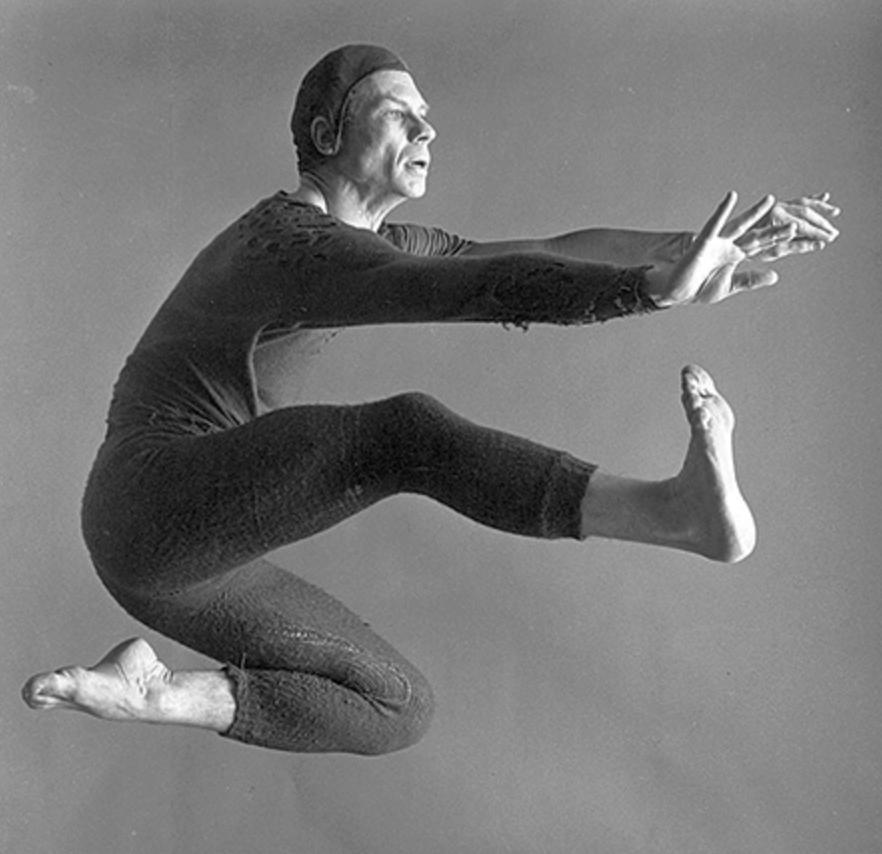
Recently I’ve been pondering putting together a collection of my criticism and reviews, together with a hopefully substantive introduction on my conception of arts criticism. This reminded me of my earliest published pieces in 1978, a review of the Talking Heads second album, and a review of a performance of the Merce Cunningham Company. The miracle of on-line digital archives has presented me with the text of those reviews. Although it’s juvenalia, I thought the Cunningham review sufficiently interesting, in its gushing late-adolescent way, to re-publish, both because I still agree with the skeletal statement of Cunningham’s poetics, and because it displays my life-long orientation in criticism towards re-constructing (and in the more mature writings analyzing) the relevant artistic poetics. Here it is, with some added photo illustrations:
Review of Merce Cunningham Company, published November 1978
It would be impossible to give the venerable avant-garde dancer and choreographer Merce Cunningham enough praise in a short review. Perhaps no other artist in any medium has produced such consistently high-quality and influential work over the past thirty years. On October 27 and 28 [1978] Cunningham and his dance company performed at the Flint Center [in San Jose, California].
From his first collaboration with the composer John Cage in the mid-40s, Cunningham has rethought the relationship between music and dance, and discovered creative possibilities hitherto unexploited. The music and the dance are composed separately and without any necessary correlation, except a common duration. Dance is freed (finally!) from narrative or trivial psychologizing; music is no longer the obedient daughter who ‘accompanies’ or ‘expresses’ dance. The stage is opened up to a scintillating play of gestures, movements, colors, sets, and sounds, and a fresh breeze revivifies the temporal arts.
Aeolus of this breeze, Cunningham reorganized dance internally. Balletic style is in many ways retained yet purged of its drama, its silly games of formal symmetry, anticipation, and resolution. Meaning is abolished. Every piece lasts long enough to convince the spectator that it could go on forever. Freed from the crutch of music, the dancers move with all the rigor and necessity that chance choreography allows. Movement is once again possible. The spine, for example, is not just a foundation and source for the arms and legs, but is itself a machine of joy with its own movements and rhythms. Cunningham has quietly taken a broad leap toward new possibilities of human movement, perhaps even toward the ‘remaking of the body’ demanded by Artaud.
On October 28, Cunningham performed three pieces with sets and music by Morris Graves, John Cage, and David Tudor, among others. Wearing bright, monochromatic costumes, the dancers in ‘Fractions’ explored the possibilities of multiple groups that coalesce, dissolve, and re-form in patterns all the more delightful for their evanescence. The work was finished when six large colored rectangles, having been lowered and raised at various moments, were lined up in a row.
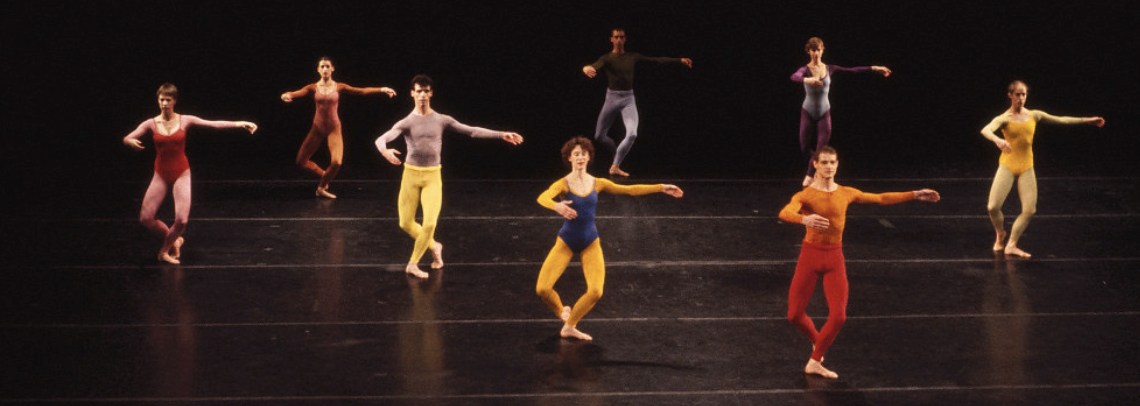
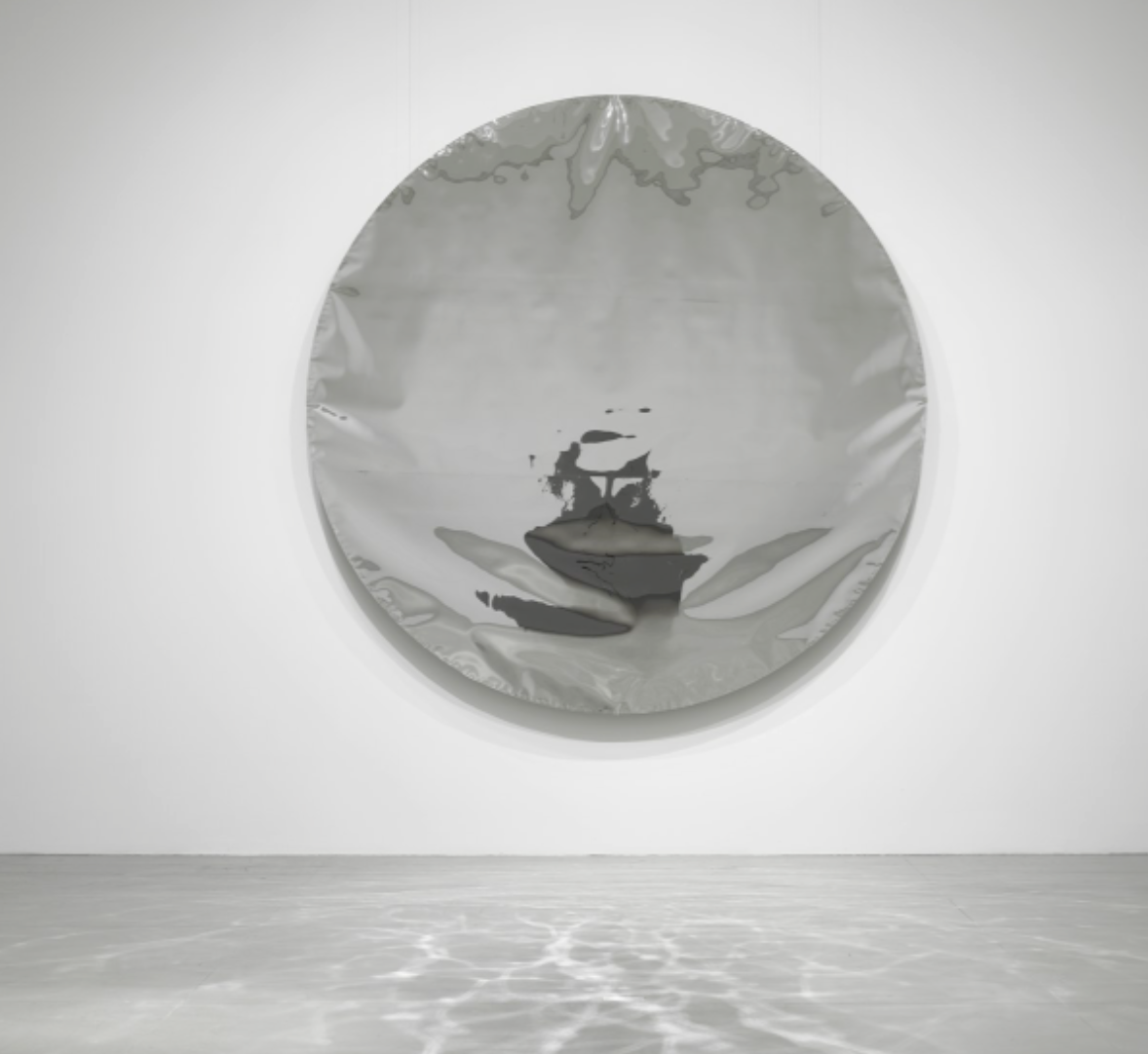
‘Inlets’, with music by Cage, was performed with white gauze draped in front of the stage so that the dancers were seen as if through a mist. As the lighting slowly brightened, the dancers, as if organizing themselves from the mist, became visible and made slow, meditative movements. The whole effect was like a [Yves] Tanguy [painting] come alive. The piece ended when the only stage decoration, a huge silver circle, completed its movement from left to right.
The final piece, the very popular ‘Squaregame’ with music by Takehisa Kosugi, is a joyous, exuberant, almost athletic work performed by most of the company. The highlight of the piece is undoubtedly the dancing of Cunningham. Seemingly ignoring most of the ensemble’s movements, Cunningham occasionally soloed and despite his age displayed remarkable suppleness, particularly in the quick, elastic movement of his knees. His dancing demonstrates the extreme economy and profound self-reflection of a ripened, fully coherent style animated by continual invention. Surely he is one of the miracles of twentieth-century art.