Vid Simonit’s book Artists Remake the World (2023) is a rare instance of a sophisticated, well-informed, and artistically sensitive philosopher addressing issues internal to the practice of contemporary art. His topic is what he calls the exhibition-based works of capitalist democracies of this century. His project arises from a few experiences of exhilaration and artistic power, whose effect, he says, is to ‘unhinge’ us from our ordinary ways of thinking; and experiences of disappointment, where the artwork seems to aim at some accomplishment that could be done as well or better in the non-artistic realms of politics or social work. He notes that the contemporary artworld “is awash with ever-evolving approaches to political theory and practice--from critical race theory to ecofeminism, from Occupy to climate justice, from utilitarianism to accelerationism” (p. 3), and so his concern is with the relationship between contemporary art and politics, focused into a question: ‘What can art contribute to politics?’ (p. 9) The answer to this question requires consideration of actual, specific cases, and reflection upon the achievements. This short book, then, consists of seven chapters, most of which are devoted to consideration of a specific kind of contemporary art, that is, one that addresses a particular topic of some political urgency. Simoniti’s procedure is to confront particular works with the aspirations animating them, and to ask whether they the work under consideration fulfills its ambition, and further whether that ambition is something worth fulfilling with an artwork. He offers a sketch of an account of why and how contemporary artworks with political ambitions succeed, and this, I take it, is what he means by subtitling the book ‘A Contemporary Art Manifesto’: the account of successful works is not simply analytic, but rather is offered as something to which contemporary artists should rightly aim for their works insofar as such works embody political ambition.
Simoniti begins with a sketch of the chief characteristic of contemporary art, which he takes to be its experimental character stemming from the Duchampian dogma that ‘anything can be a work of art’, and so, he claims, contemporary artworks are not ‘medium-based’ in the sense of drawing upon a history of authorized, meaning-bearing materials, but rather can have as their embodiment anything whatsoever. In recent decades, with the rise in prestige of the so-called biennial, many works take the form of an inquiry rather than of a commodity. He then discusses the emergence of political aims in recent art, Simoniti devotes successive chapters to five kinds of contemporary art, where some distinctive non-artistic concern characterizes the artistic kind: (a) a new kind of realistic art wherein the work documents some recent historical incident or social concern; (b) artworks that aim to be useful with regard to some social or political issue, and which are primarily made or enacted outside the gallery; (c) artworks that aim to exhibit and articulate some social identity, especially with regard to sexual orientation or ethnic group (Simoniti appropriates the philosopher Nelson Goodman’s term ‘worldmaking’ to describe the characteristic poetics of these works); (d) artworks that aim to address contemporary viewers’ immersion in the internet; and (e) artworks expressive of concern with the climate crisis or the current high rate of extinction of plant and animal species. For each kind he considers instances of its failures and success. At the most general level, such artworks fail through what one might call their literalism, where the artwork offers nothing for perception, imagination, and reflection that might not be given in, and perhaps more richly or effectively given in, some relevantly similar non-artistic work or project. So for realistic art, the group Forensic Architecture’s ‘77sqm_9:26min’ (2017) consists of a three-channel video installation and a long wall text that show the results of the group’s investigation of the racist murder of a young German man of Turkish heritage in 2006.
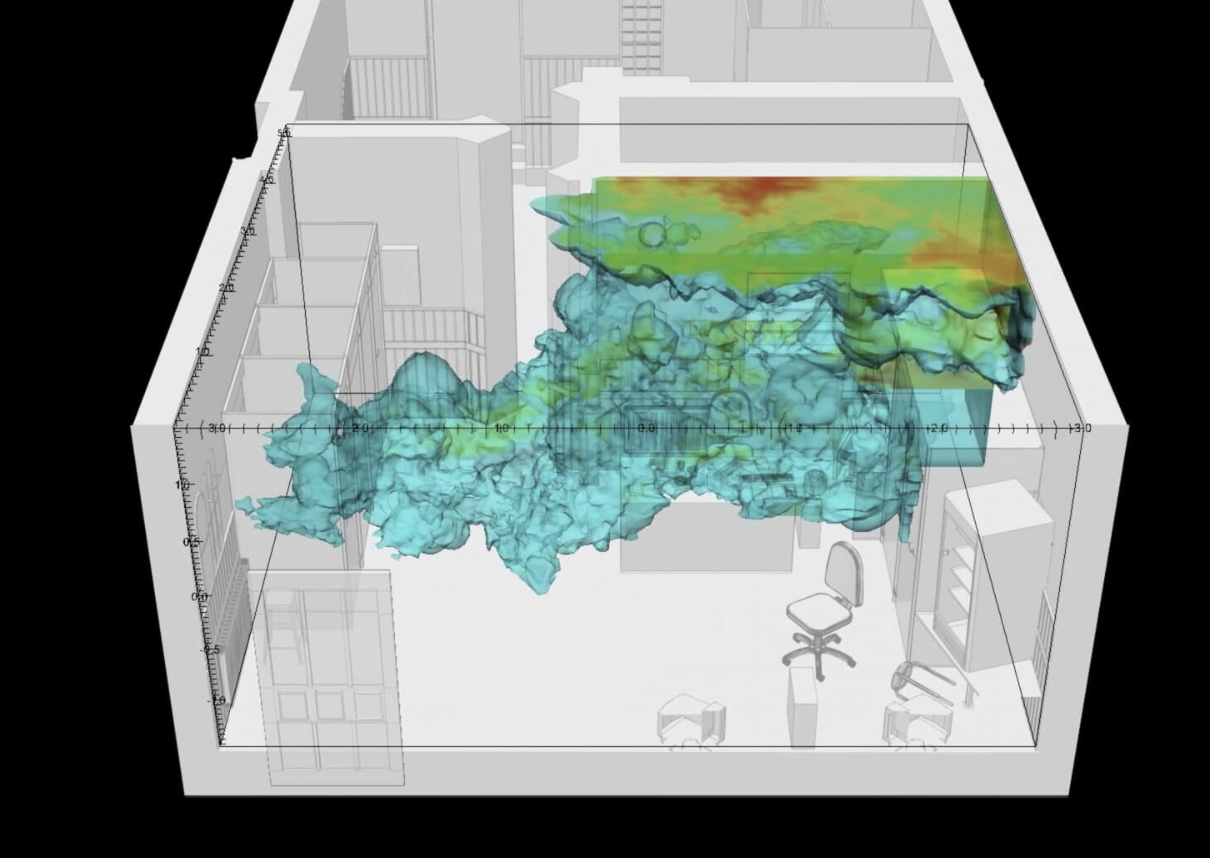
The problem with such works, Simoniti suggests, is that it “borrows so many aspects from a non-art field that the artworks become indistinguishable from an achievement in the target field [of investigative journalism].” (p. 38) This point is equally telling against works that aim for socio-political usefulness. Works that attempt to articulate some group identity fail when they are nothing more than ‘wall label politicking’, where “the work’s meaning is accessible only through the curator-speak on the wall, which in vaguely theoretical language (the use of the verb ‘think’ without a preposition is one favourite) declares what issues the artwork is meaning to be addressing”. (p. 90) Accordingly, “[t]here is nothing there for the viewer to mentally play with; all the viewer can do is acknowledge the intended meaning.” (p. 92) And so on for the other two types of art: failed post-internet art merely recapitulates the typical experiences of bursts of rapid-fire attention-grabbing data and images, and failed arts of climate change or concern for species offer nothing that would not be otherwise available in non-artistic projects.
So how might contemporary gallery-based artworks of the five kinds succeed as art? And how does their success contribute to some political aim? For each of the kinds Simoniti gives one or two examples of works that succeed in offering something more or other than their imagined non-artistic counterparts. Most of these works were hitherto unfamiliar to me, but Simoniti does discuss one of Wangechi Mutu’s well-known sculptures, ‘The Backoff Dance’ (2021),
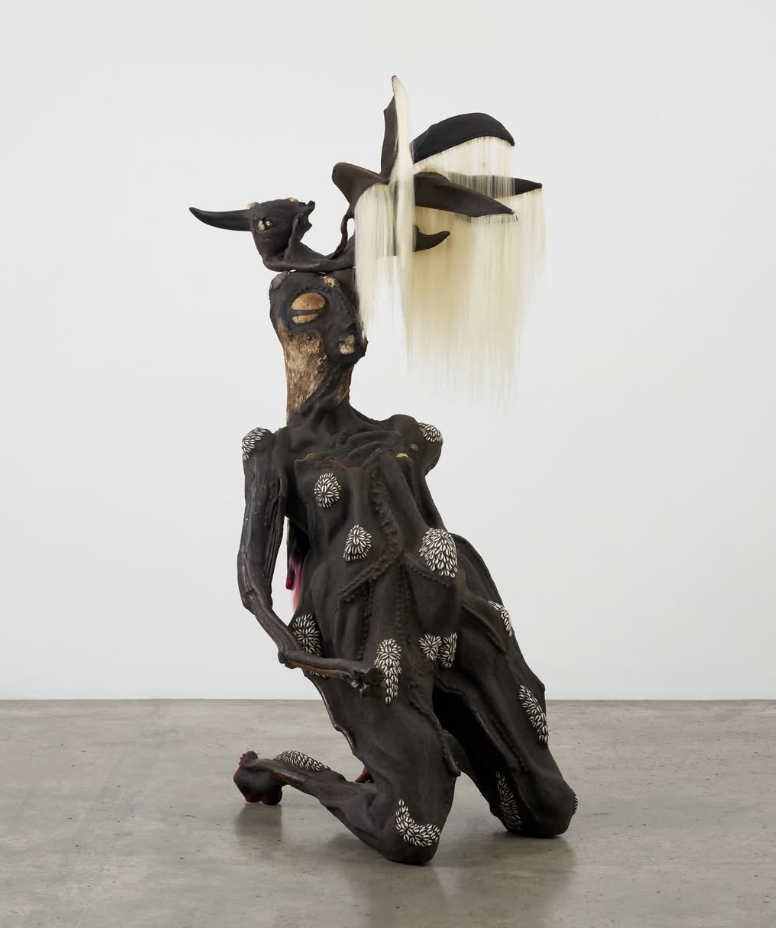
as a successful instance of social identity worldmaking, as well as Hito Steyerl’s video installation ‘Factory of the Sun’, that I wrote about at some length a decade ago (Rapko (2016)).

In contrast to the inferior works, the successful works first of all induce in the viewer ‘aesthetic experience’, which Simoniti characterizes in what he calls a traditional eighteenth- and nineteenth-century sense. Simoniti’s discussion of aesthetic experience is episodic and brief, but he points to three aspects with regard to the contemporary artworks under consideration. Aesthetic experience arises (i) when the viewer is given the opportunity “to become engrossed in the internal structure of the work” (p. 143;); (ii) when the viewer is given something “to mentally play with”, (p. 92) and (iii) a kind of pleasure arises from ‘the free play of the mind’ that “is simply the joy of the thought process which the artwork provides us with” (p. 93; Simoniti explicitly acknowledges his evident indebtedness to Kant for this characterization). For the second feature Simoniti appropriates Donna Haraway ‘staying with the trouble’, but, inspired by the philosopher Cora Diamond, replaces ‘trouble’ with ‘difficulty’: the successful works are said to ‘stay with the difficulty’ in that they address out-of-the-ordinary, complex, obscure, or even seemingly paradoxical phenomena and issues without schematizing or simplifying them into unproblematic everyday conceptions or judging them through simple moral dichotomies (acceptance/rejection; good/bad; good/evil). In the exhibition of Mutu’s work at a gallery in London in 2014, “the audience were also asked to eat chocolates in the shape of these mermaid-like creatures, and post the images on Instagram”. Simoniti oddly thinks that this induces us, the viewers, to play an ambiguous role “where objectification of Black women’s bodies is part of a path towards success and self-promotion” (pp. 101-2). Simoniti also thinks that Steyerl’s dispiriting (see my review) piece reminds us that “the line between self-realisation and exploitation is blurred in the online economy”, an artistic effect induced by Steyerl’s use of “an open interpretative structure” of complex allegory, where “the artistry consists of creating just enough symbolic correspondence so that we can begin to unveil within their images a metaphor for the ecstasies, violence and economic extraction in the new, digital political landscape”(p. 114).
How does this provide the materials for answering Simoniti’s guiding concern with contemporary gallery-based art’s contribution to politics? Simoniti’s aesthetic conception of such art, together with his rejection of the various manners of literalism in the unsuccessful work, indicate that for him successful works cannot plausibly be thought to induce any immediate political effects of any sort. If I understand him rightly, he sees two sorts of typical contributions. First, he repeatedly insists that such works induce attention to the incidents and issues addressed and an awareness of their typically overlooked, ‘difficult’ aspects. Second, such works with their political content do take the form of an inquiry, but one which (unlike literalist works) incorporate imagination and exploration of kinds of attention, perception, and general sensibility that are alternatives to what prevails in the world. With regard to the successful works addressing climate change and species extinction, he writes that “[t]he artwork creates a blueprint for a different manifest world, and therein, lies their contribution to politics.” (p. 152) The successful contemporary artwork with a political aim helps create the possibility of and perhaps desire for a different way of living.
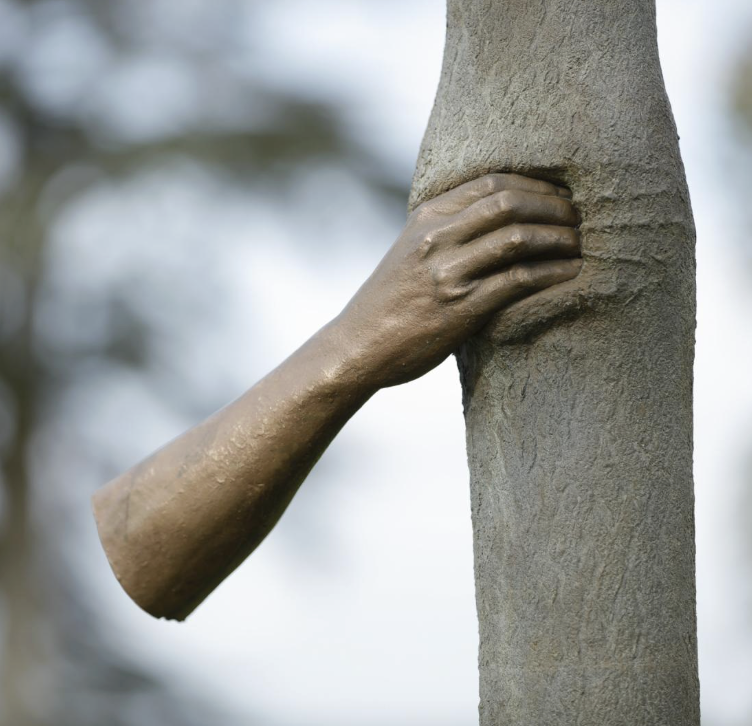
What can one make of Simoniti’s intellectually sophisticated, artistically sensitive, and finely written attempt to articulate criteria for success in contemporary gallery-based works with political ambition? I have great sympathy for Simoniti’s views, both his sense of what questions one might ask of such works, and in the general outline of his positive views on aesthetic experience and the ‘blueprint’ character of successful works. And although I cannot really follow his lead on the alleged aesthetic effects of chocolate mermaids, Instagram posting, or the salutary character of Steyerl’s piece, I do not doubt that something like his account would work for other pieces by contemporary artists, including some of my favorites such as William Kentridge, Cai Guo-Qiang, Adrián Villar Rojas, and Giuseppe Penone.
A first response would be to note that in his conception of successful works, Simoniti actually outlines the perennial character of the arts, not just recent works. Recognizing this might partially relieve Simoniti’s account of the threat of arbitrariness; these are not just Simoniti’s idiosyncratic responses to some very recent works, but rather responses massively shaped by the whole history of human artmaking and reflection.
References and Works Consulted:
Cora Diamond, ‘The Difficulty of Reality and the Difficulty of Philosophy’, in Philosophy and Animal Life (2008)
Nelson Goodman, Ways of World Making (1978)
Donna Haraway, Staying with the Trouble (2016)
Immanuel Kant, The Critique of Judgment (1790)
John Rapko, ‘Review: Hito Steyerl’s ‘Factory of the Sun’ (2016), in academia.edu (https://www.academia.edu/26039426/Review_Hito_Steyerls_Factory_of_the_Sun)
Vid Simoniti, Artists Remake the World: A Contemporary Art Manifesto (2023)