After the intermezzi of my early art loves and a short book review, I return to the consideration of the anthropologist Philippe Descola’s magisterial Forms of the Visible, surely the greatest contribution in the twenty-first century, along with Carlo Severi’s two books, to the anthropology of art. As outlined in the earlier post, Descola’s most recent book explores the hypothesis that each of the world’s four great ontologies--animism; totemism; analogism; naturalism--generates a distinctive kind of visible figuration in artifacts. Descola devotes 80-110 pages to each of the four ontologies, so my summary will necessarily leave out a great deal; I will, however, try to render here what I take to be his central points for the first three (with the summary of the fourth to follow in my next post). For each type of figuration, Descola presents the distinctive central problems and aims of the figures, then for the first three ontologies takes up one or two particularly well-documented examples in anthropological literature; for the fourth type, naturalism, the characteristic ontology of Western Europe from the 14th through mid-20th centuries, he unsurprisingly draws from major and mostly familiar works of art history, though including some recent Francophone accounts that were new (and invariably interesting) to me. So:
1. Animism: In Descola’s conceptual grid in animism humans and other beings have similar interiorities but manifestly distinct ‘materialities’ (i.e. bodies). The so-to-speak core ontological experience is detecting in non-humans (plants and animals, and also rocks and any salient physical object) “an intention that seems to be addressed to us” (p. 57) With human beings’ basic familiarity with grasping the interiority of other human as a background condition, “the challenge of animist image-making is how to make the subjectivity of nonhumans perceptible and active” (p. 58). Further, an animist image must somehow acknowledge that “[w]hether human or nonhuman, an intentional subject is never alone in the animist world” (p. 60). Thirdly, “metamorphosis is the litmus test par excellence of animism, because it reveals with great clarity the keystone that ensures solidity and coherence in that ontology: not only do subjects, human and non-human alike, enjoy comparable inner lives, but that mobile attribute can inhabit very diverse bodily envelops” (p. 80) Descola’s central examples of animist figuration come from the far northern peoples, first of all the Yu’pik of Alaska, and also the non-contemporary Dorset and Thule cultures of northern Canada, along with related cultures of far Eastern Russia and Greenland, with further examples primarily from the Amazon. The Yu’pik are among the world’s greatest mask-makers, whose masks in many cases show some readily identifiable animal embedded with a human face.
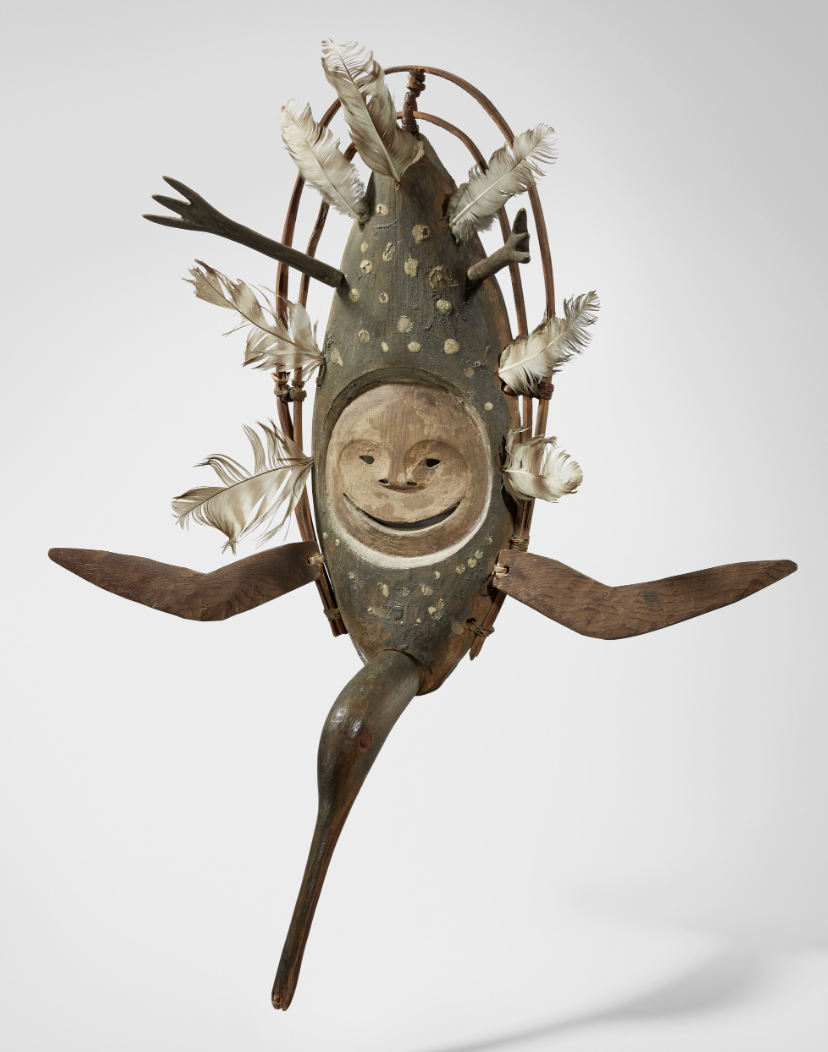
Such masks are often made in pairs “so as to make evident a relation of complementarity” between different species and/or different verses of the dancing song wherewith the masks are used. (p. 60) The human faces figure “attributes of human interiority” (p. 61), with the frequent halo-like bands giving further attributes of humanity such as a face, hands, or clothing (pp. 62-3). The Dorset culture (800 BCE-1500 CE) produced many small figurines of animals in movement.
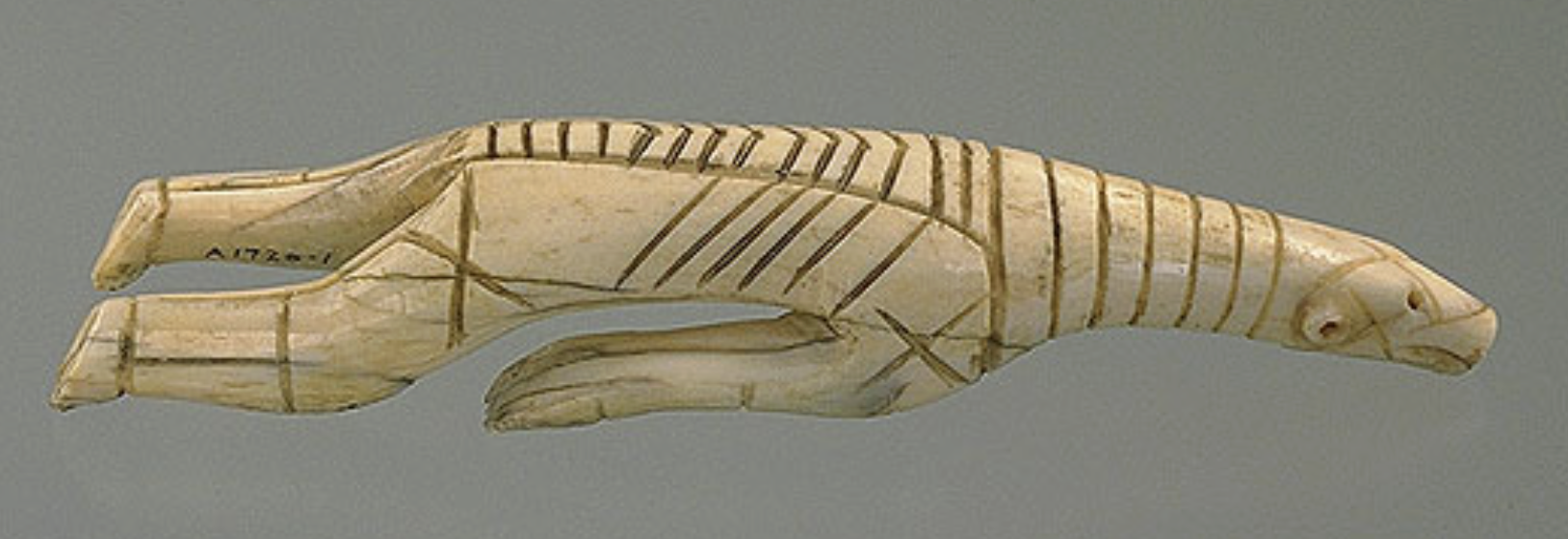
Descola considers these and similar, though typically simpler, sculptures from other Northern groups to be typically animist in that they are ‘think animals’ aiming to keep the hunters’ prey constantly in mind (p. 66), and that their implied movement facilitates this aim. Considering one category of Yup’ik masks, asymmetrical ones with one eye half-closed,
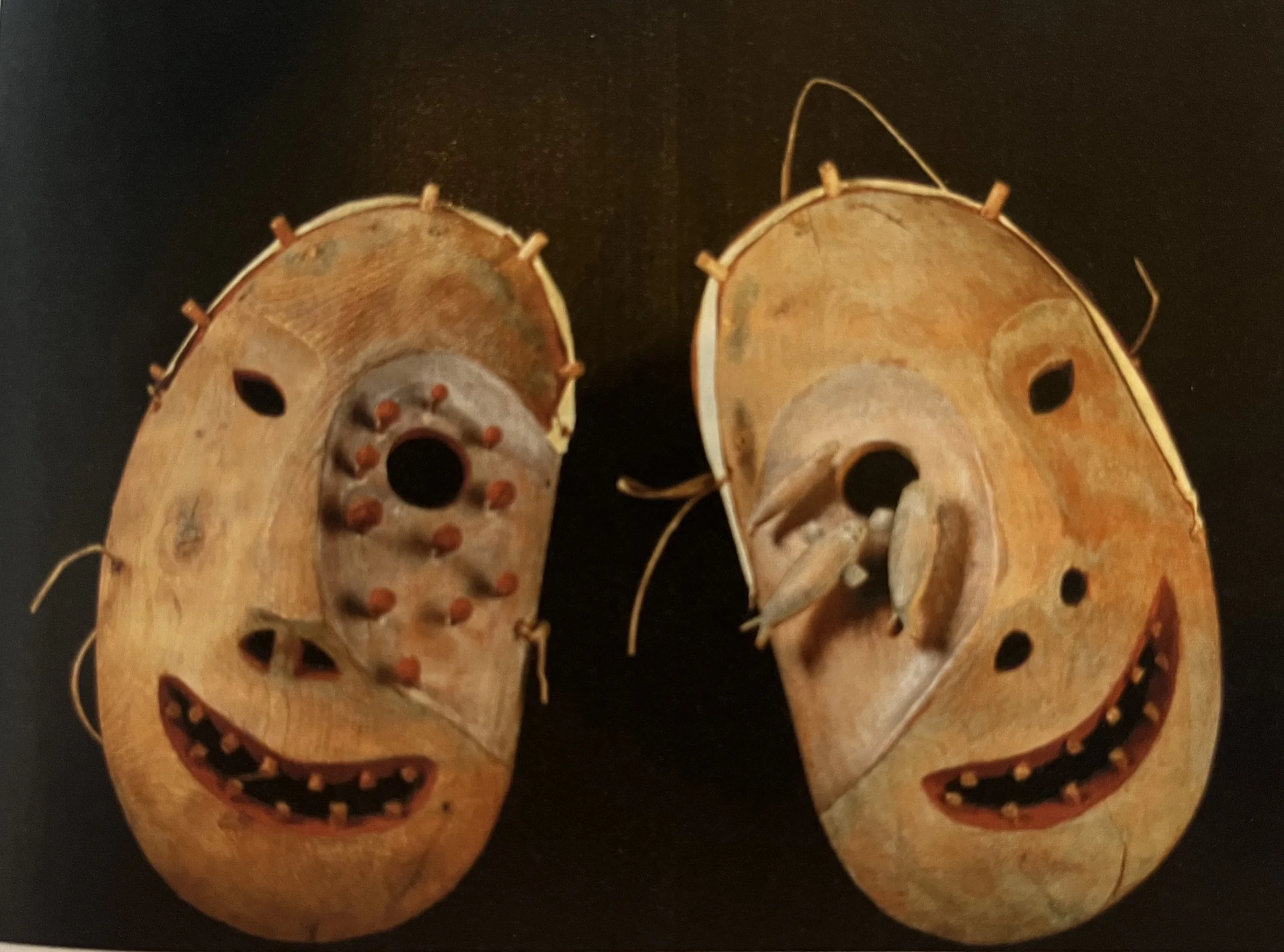
supports this interpretation, in that the masks figure “the importance, for hunting, of penetrating eyesight”, with the half-closed eye representing the animal seen by the hunter but not itself seeing him (pp. 67-8). Metamorphosis, especially animal-to-human-to-animal, is in Yu’pik masks in their showing “the capacity of each class of existents to have a specific vantage point on the world, owing to its physical aspects, along with the possibility of any being to shift into the vantage point of another” (p. 85)
2. Totemism: The most general aim of totemic images is to show “unambiguously that the human and nonhuman members of a totemic class share the same essential and material identity” (p. 147), an identity derived from some original prototype. The visible qualities that individuals might share include kinds of behavior, forms, luminosity, textures, and moral dispositions (p. 146). No one familiar with the world’s anthropology of art will be surprised that Descola’s central examples of totemic images come from Australian Aboriginals, both the northern groups in Arnhem Land and those from the central western desert, stunning images in art that are richly documented and much discussed in the literature. The original prototypes are various beings of the mythic Dreamtime, and the actions of those beings have given rise to prominent features of the landscape, and further the pigments used in depictions likewise derive from those prototypical beings (p. 147). The bark paintings of the Arnhem Land Yolngu offer exceptionally rich and full instances of such totemic images.
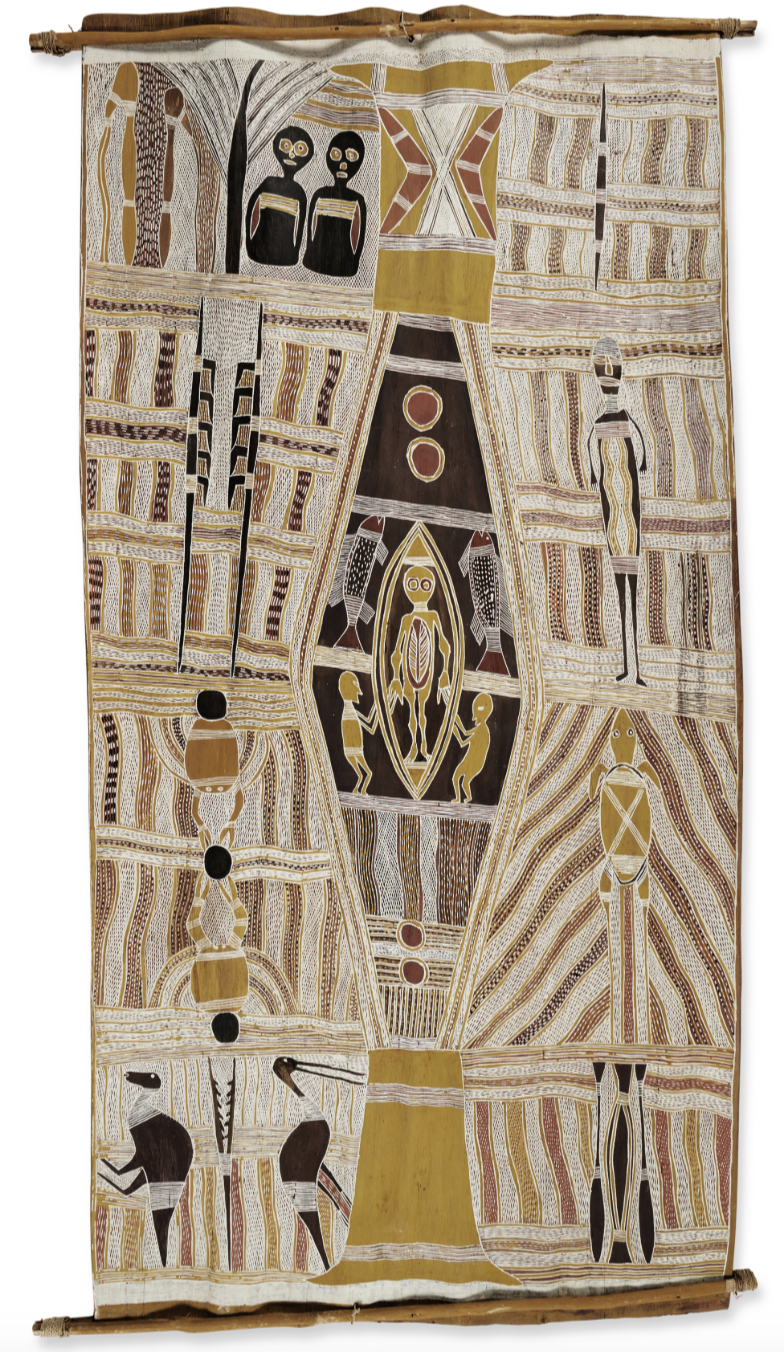
The complex compositions include numerous figurative blocks containing figures and embodying their Dreamtime stories and associated with particular sites. Those beings, stories, and sites are themselves associated with some particular clan. Accordingly, “[e]very Yolngu bark painting thus figures simultaneously an organizing story of the Dreamtime, the genesis of an environment, a map schematizing topographical features, and a sort of crest; the whole attests to a profound link between a descent group, a site, and an ontological genesis” (pp. 155-6). Another prominent totemic image is the so-called ‘x-ray’ paintings that show an animal with some visible internal organs.
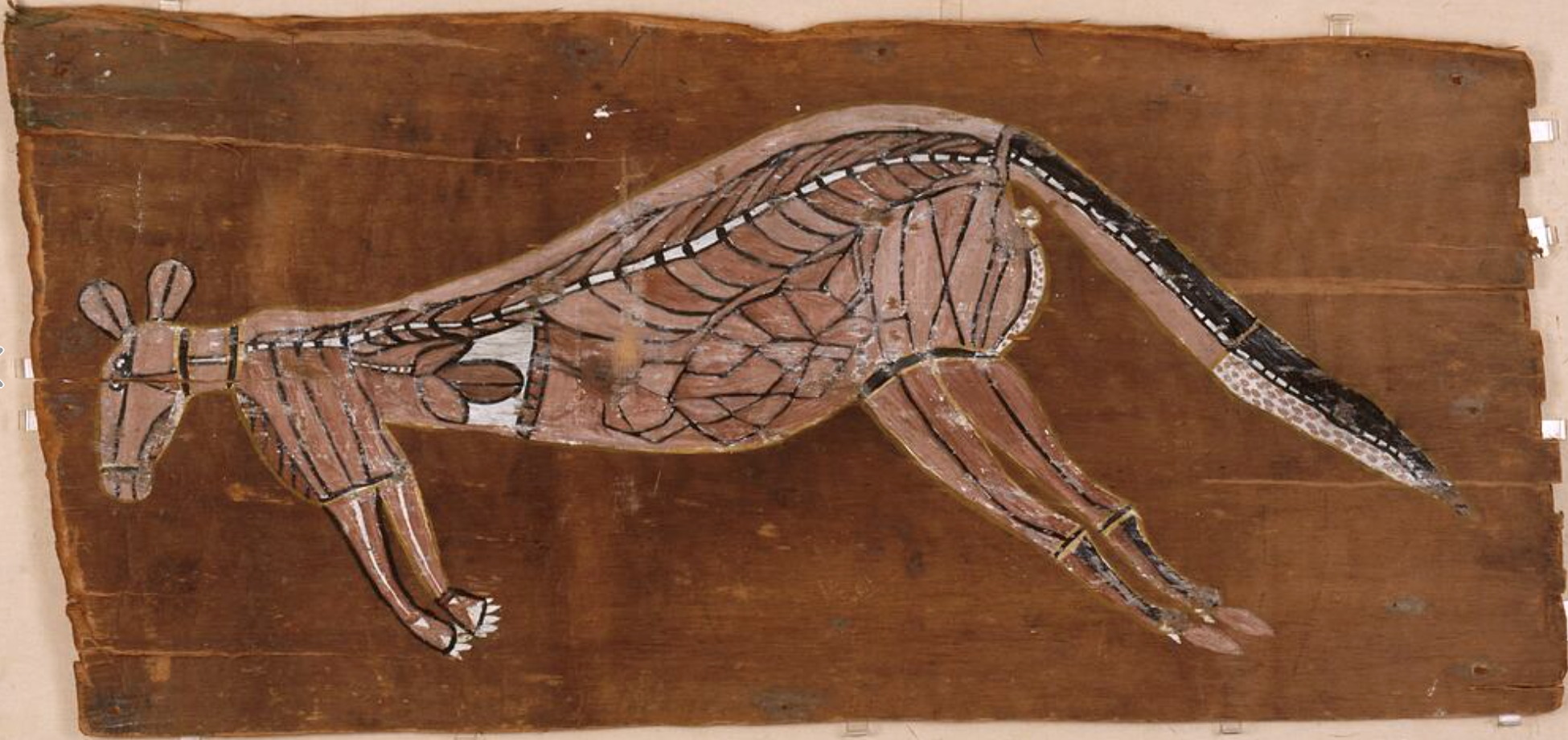
In some cases the internal organs provide indications for butchery, but also in ritual contexts provide motifs that facilitate decorated dancers’ identification with the totemic being. More generally, in such paintings the being is depicted as immobile, because each represents “the atemporal charter of the totemic organization”, and, as a silhouette against an undifferentiated ground, deprived of relation to any particular milieu (p. 162). The well-known dot paintings of the deserts accomplish the tasks of totemic imagery in different ways.

The paintings represent a “topological morphology” (p. 169) of sites and paths created by the movements of Dreamtime beings.
Thus the different types of paintings--bark, x-ray, and dot--exemplify three different formal approaches to the problems of totemic imagery: the bark paintings render Dreamtime narratives; x-ray paintings (“undoubtedly the ideal-type of totemism” (p. 181) the most straightforward depiction of the Dreamtime beings and their characteristics; the dot paintings show the generative activities and physical trajectories of the beings (pp. 180-84).
Analogism: The central ontological task of analogist figuration is “to make visible the web of correspondences deployed among discrete elements”, and accomplishing this “requires a proliferation of the disparate components of an image as a way of resisting the temptation to take the image as a representation of an individualized subject” (p. 230). Analogist figuration aims not “so much to imitate an objectively given referent with verisimilitude as to restore the weft of affinities within which this reference acquires meaning and exercises a certain type of agency” (p. 231) Descola’s discussion of analogist imagery is the longest in the book, and ranges much more widely than his accounts of his first two kinds, with examples from West Africa, Polynesia, the Mimbres pottery of New Mexico, Medieval Europe, the Huichol of Mexico, China, and Japan. The greater length is perhaps required because it “is difficult to identify an analogist image with certainty” because “the ontological schema that serves as its framework turns out to be much more abstract” than those of the other ontological modes (p. 231). A corollary of this is that it “is even probably characteristic of analogist images in general that they illustrate, condense, or punctuate utterances, as if the complex task with which they are entrusted--to put disparate things in order--cannot be achieved with the help of spatial organization alone and requires, in addition, the temporal sequencing and the semantic counterpoint that a narrative contributes” (p. 237).
With these complex tasks of and strictures upon analogist imagery, one is perhaps not completely surprised by Descola’s claim that “[t]he classic figure of the analogist imagery . . . is a chimera, a being composed of attributes belonging to different species but presenting a certain coherence on the anatomical level” (p. 234), and indeed chimeras are attested in a great range of cultures.
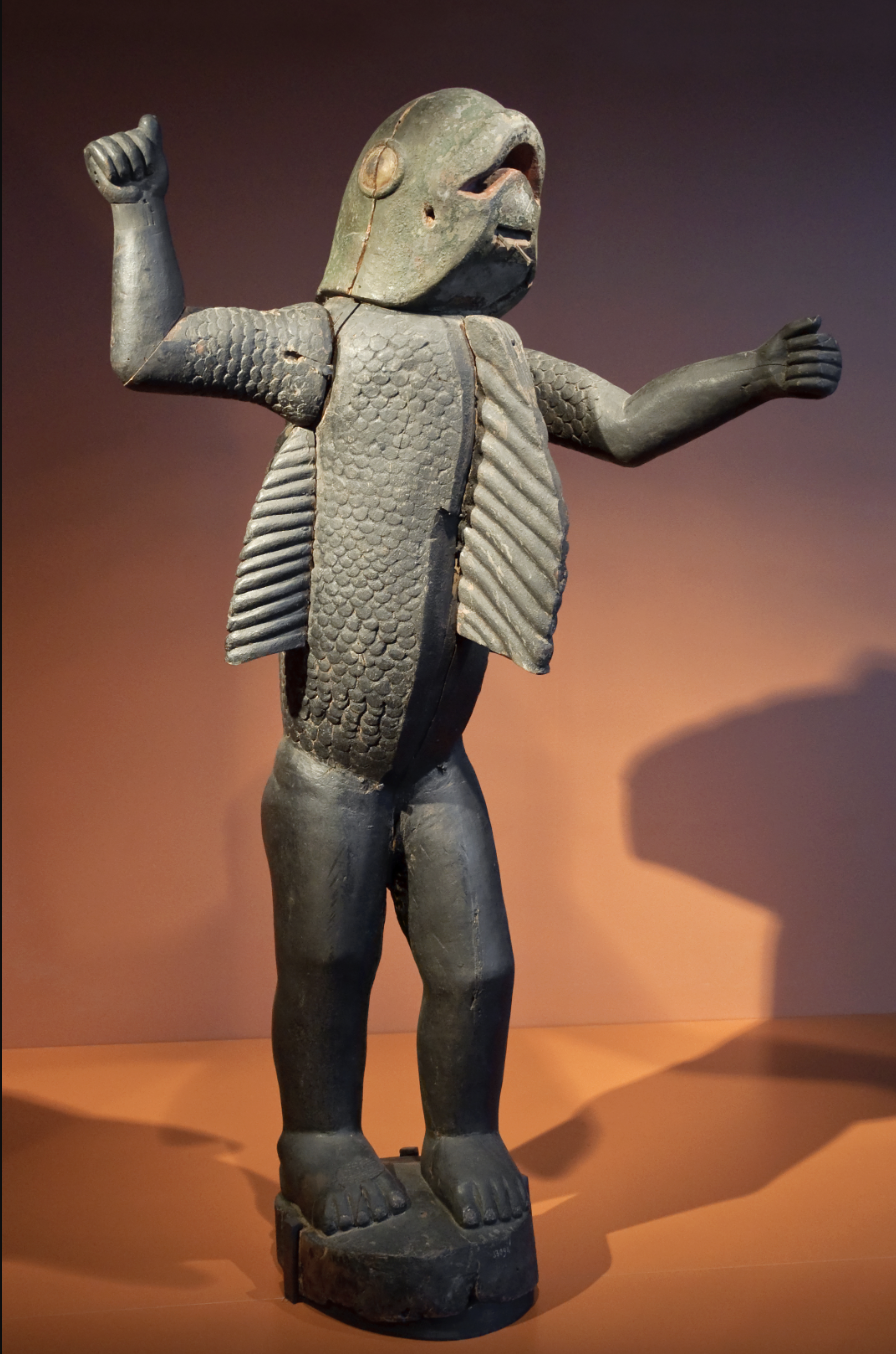
What Descola calls three ‘modalities’, that is, visual mechanisms of image composition, govern the creation of analogist hybrid beings generally: recomposition, where (as in the photo above) the figuration shows “a more or less coherent being on the anatomical and functional levels” (p. 248); lexicalization, an image showing a standard animal taxon but whose name derives from unrelated lexemes (e.g. ‘catfish’ or ‘bulldog’); and agglomeration, where the being figured is composed of many plants, animals, and/or artifacts.
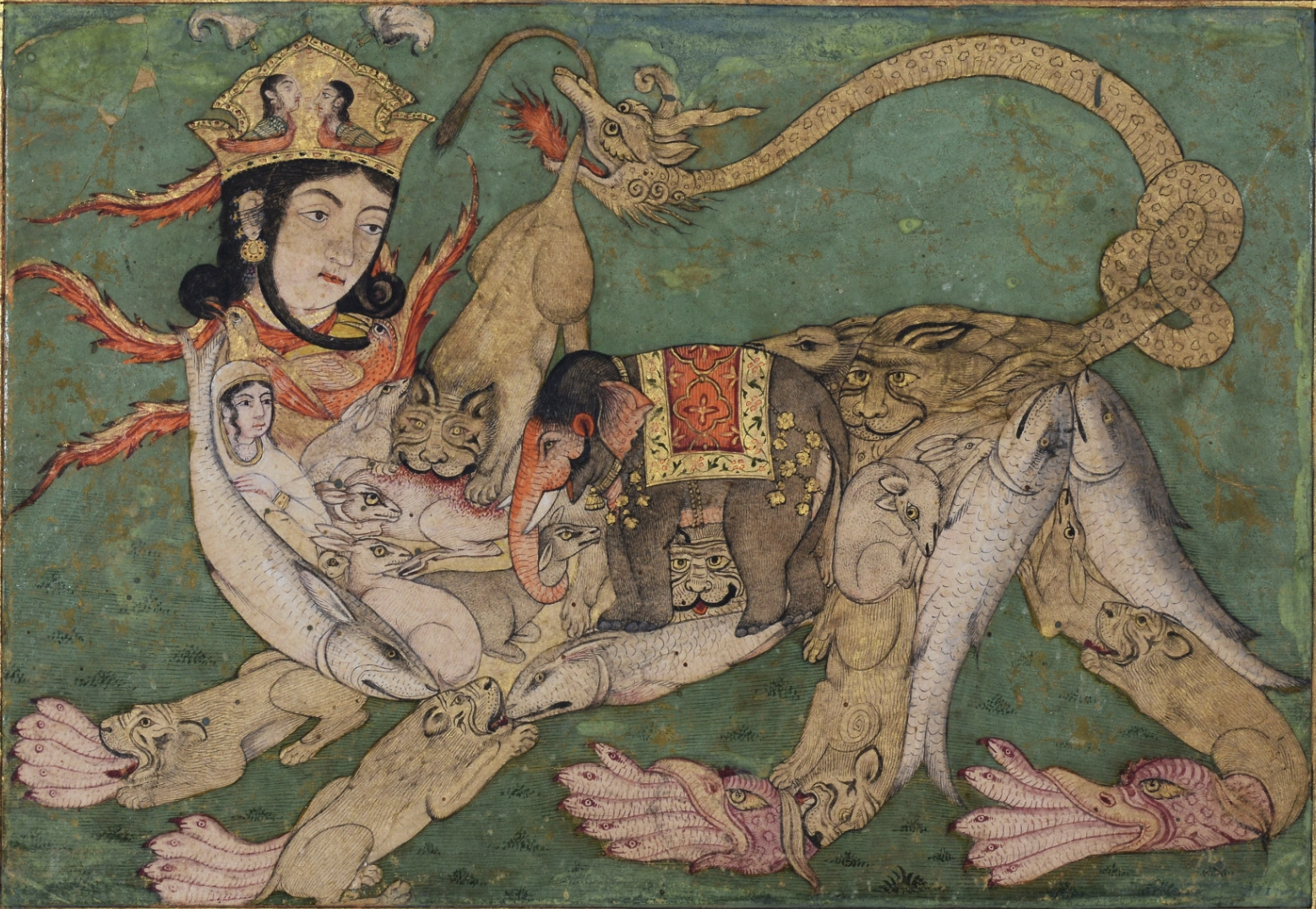
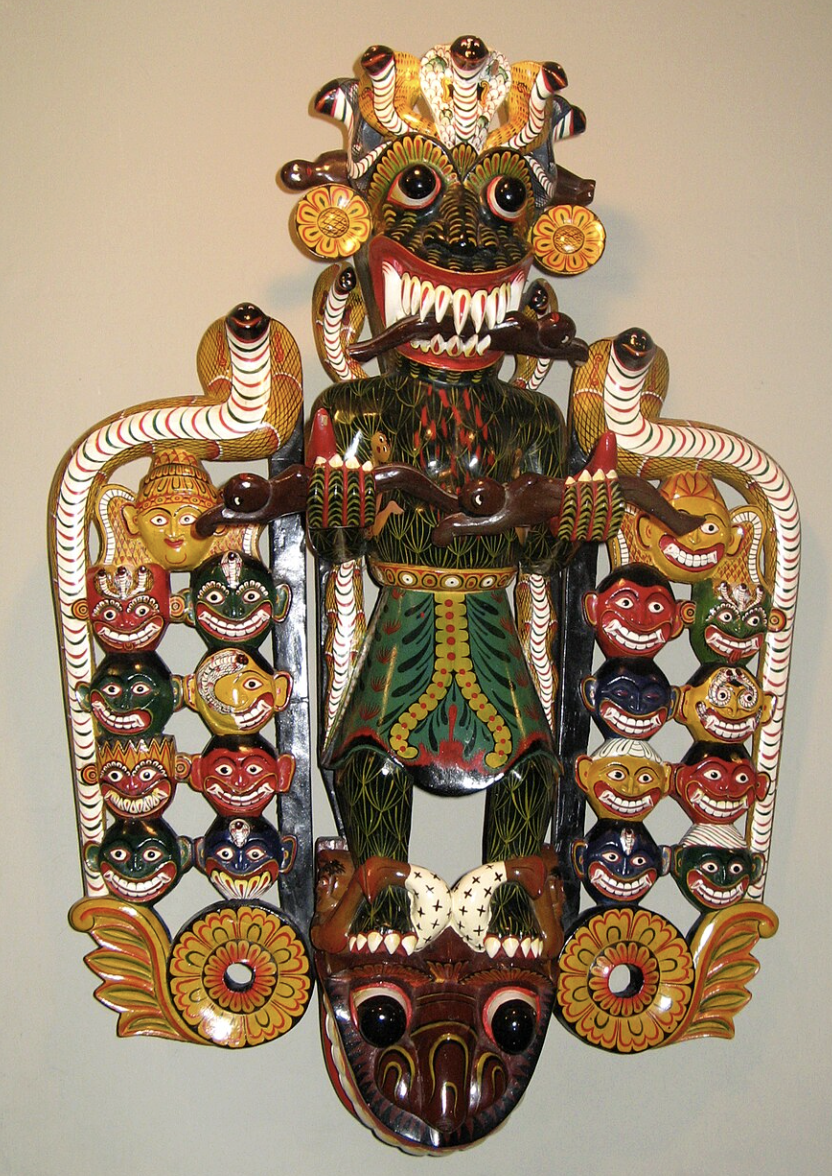
Again, as analogist images are often made of disparate elements, they primarily figure not so much individual beings or even collections of objects as modes of organizations and mechanisms of connection (p. 259). Descola claims that there are again three primary ways of achieving this basic aim of analogism: ‘hypostasis’, where some depicted being occupies a dominant visual position without eradicating the distinctive characters of the beings that make it up (p. 259), (as in this Sri Lankan mask:);
‘functional aggregation’, where the various beings depicted evidently collaborate in carrying out a common function, as in the altar-like mesas of Mexico and the Andes;

And ‘expressive determination’, where the figuration “reflects a situation in which each of the assembled elements can be seen as a particular aspect of a pre-existing whole” (ibid), as in the well-known Hopi Katcina dolls.
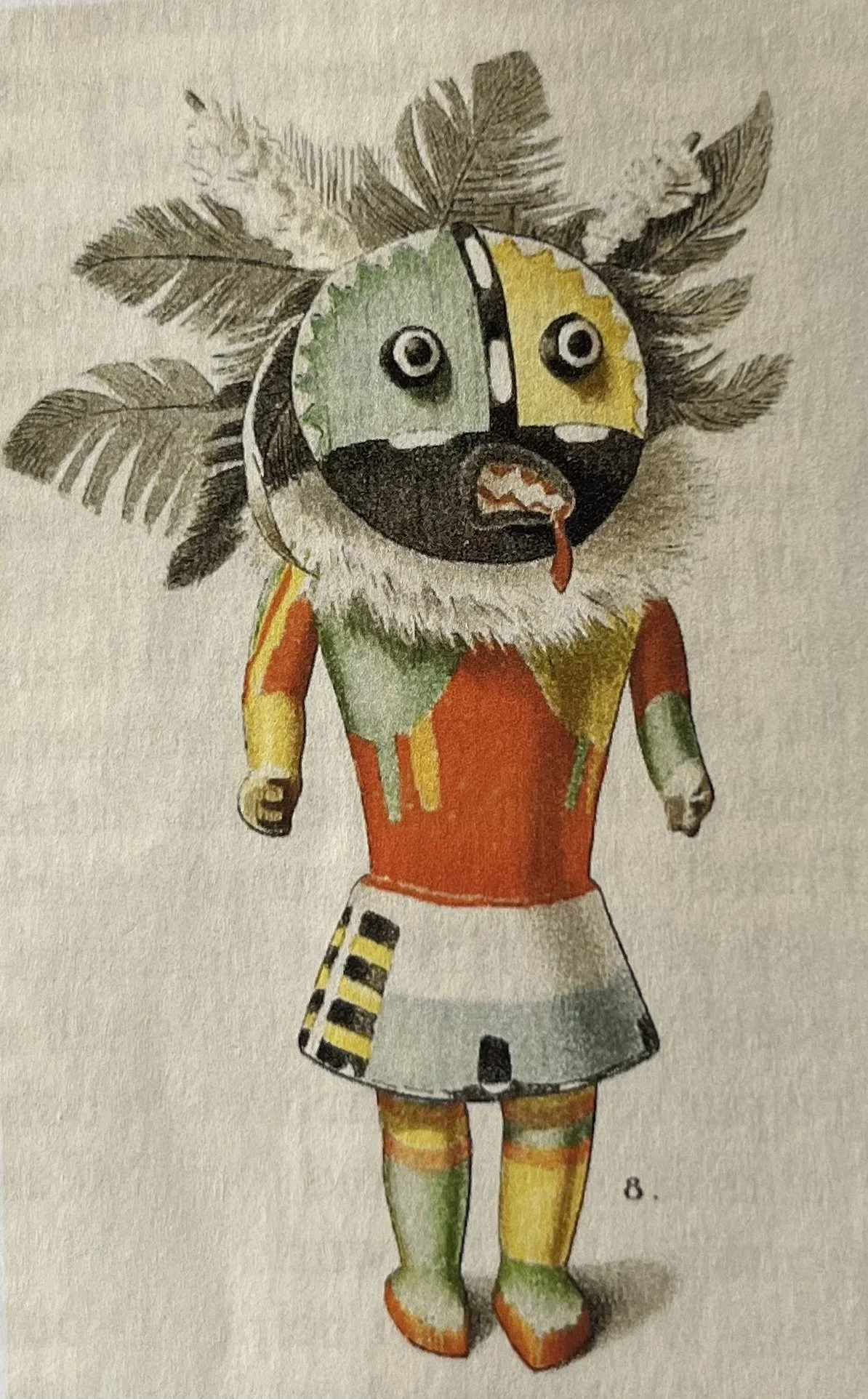
Here the doll has a crown of braided corn husks interspersed with eagle feathers, a fox fur collar, a serpentine tongue, and a multi-colored face each color of which carries a symbolic meaning.
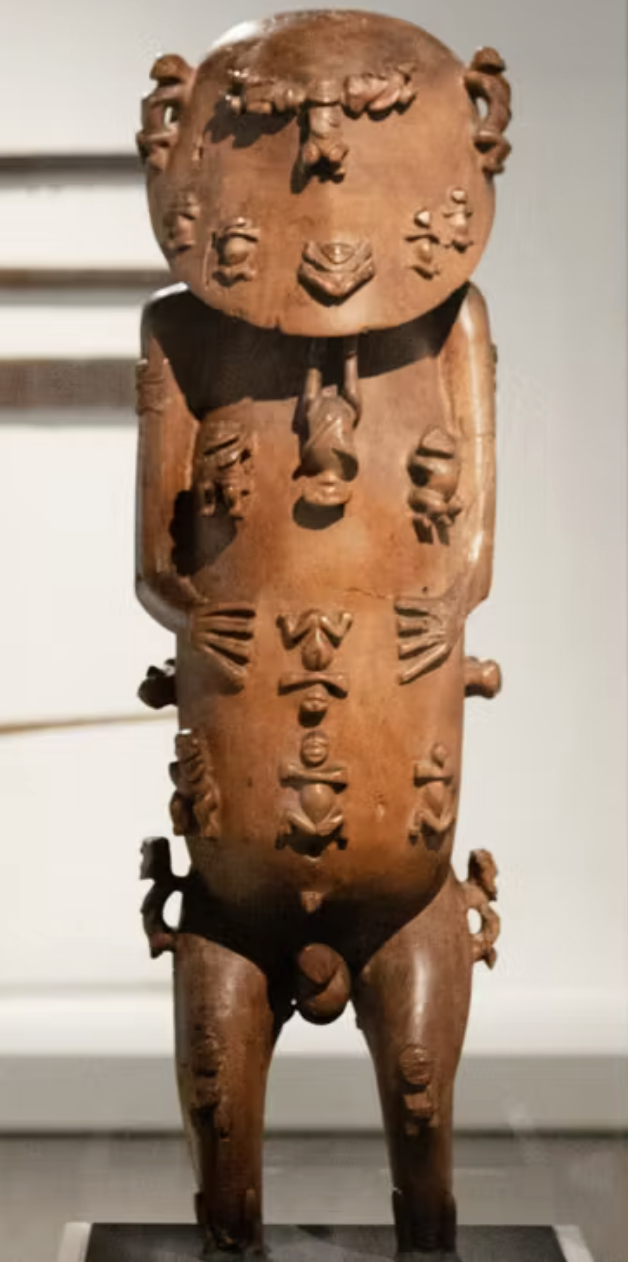
Further kinds of typical analogist images are those that “figure correspondences between the microcosm and the macrocosm” where the figured being contains indications of worlds in miniature and also something of the universe in which the being lives (p. 277), and similarly where “a single motif at different scales and at different levels of encompassment” (p. 300) is shown, as in the famous statue at the British Museum of the god A’a from the Pacific island of Rurutu:
The fourth ontology, naturalism, requires a lengthier explication of Descola’s account for even the barest summary. I’ll begin my next post with such a summary, and then compare Descola’s interpretations of particular images from each of the four ontologies with well-known prior analyses from the anthropology of art and art history, with the aim of bringing out some of the distinctive insights provided by Descola’s approach.
References and Works Consulted:
Philippe Descola, Forms of the Visible: An Anthropology of Figuration (2025)