In three previous posts I attempted to summarize the central claims and characterizations in the anthropologist Philippe Descola’s magisterial recent book Forms of the Visible: An Anthropology of Figuration. Again, and more briefly, Descola takes up his claim from his earlier major theoretical work Beyond Nature and Culture that human beings form and adopt basic ontologies with regard to two nodes: their conception of interiority, and their conception of materiality. Then a human group adopts a basic orientation towards these two nodes in stressing either the continuity or the discontinuity between themselves and their group on the one hand, and other human groups, animals and plants, and the material world generally on the other hand. This provides of grid of four conceptual possibilities, which are actualized in the ontologies of animism (continuity of interiority, discontinuity of materiality), totemism (continuity (although within discontinuous blocs of beings) of interiority and materiality), analogism (discontinuity of interiority and materiality), and naturalism (discontinuity of interiority, continuity of materiality) (as summarized at Descola (2025), p. xii). In the manner of philosophical anthropology, Descola makes posit that human beings will seek to ‘make visible’ their distinctive ontology in visual artifacts, and so there will be kinds of artifacts and works of art peculiar to each human group that ‘figure’ their ontology. The book opens and closes with methodological and philosophical reflections, then oughly two-thirds of the dense book outlines and analyzes the different artifacts of each ontology, and two additional chapters consider hybrid modes. Here in the second part of my review I’ll set aside questions with regard to Descola’s conceptual framework of the four ontologies (for some initial criticisms in English, see Lloyd (2012)), and consider three topics: 1. What kinds of interpretations of the world’s visual artifacts does Descola’s account induce, and how might his interpretations improve upon standard views? Then, in a final post, I’ll consider: 2. Does Descola’s account of contemporary visual art as a hybrid mode add anything to our understanding of such art? And 3. Why might we think that, contrary to Descola’s self-understanding, he is offering an account not primarily of the world’s visual artifacts generally, but rather visual artworks?
1. One of the central topics in the anthropology of art in the past century has been the notion of so-called ‘split representation’. Discussing this kind of representation in the arts of the Pacific Northwest in his canonical book Primitive Art, Franz Boas characterizes it “as representing complete animals more or less distorted or split” (p. 223), in particular when “either the animals are represented as split in two so that the profiles are joined in the middle, or a front view of the head is shown with two adjoining profiles of the body” (p. 224).
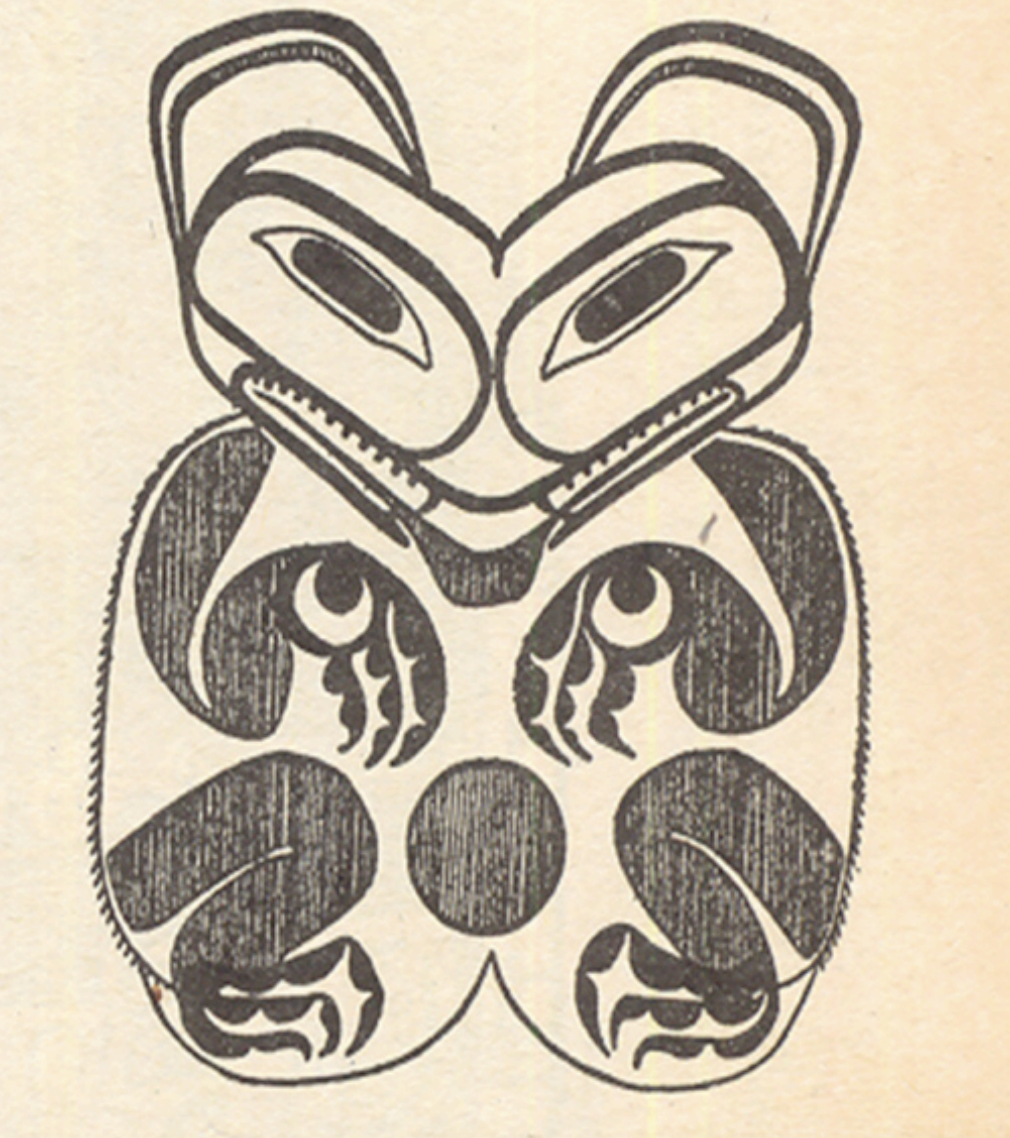
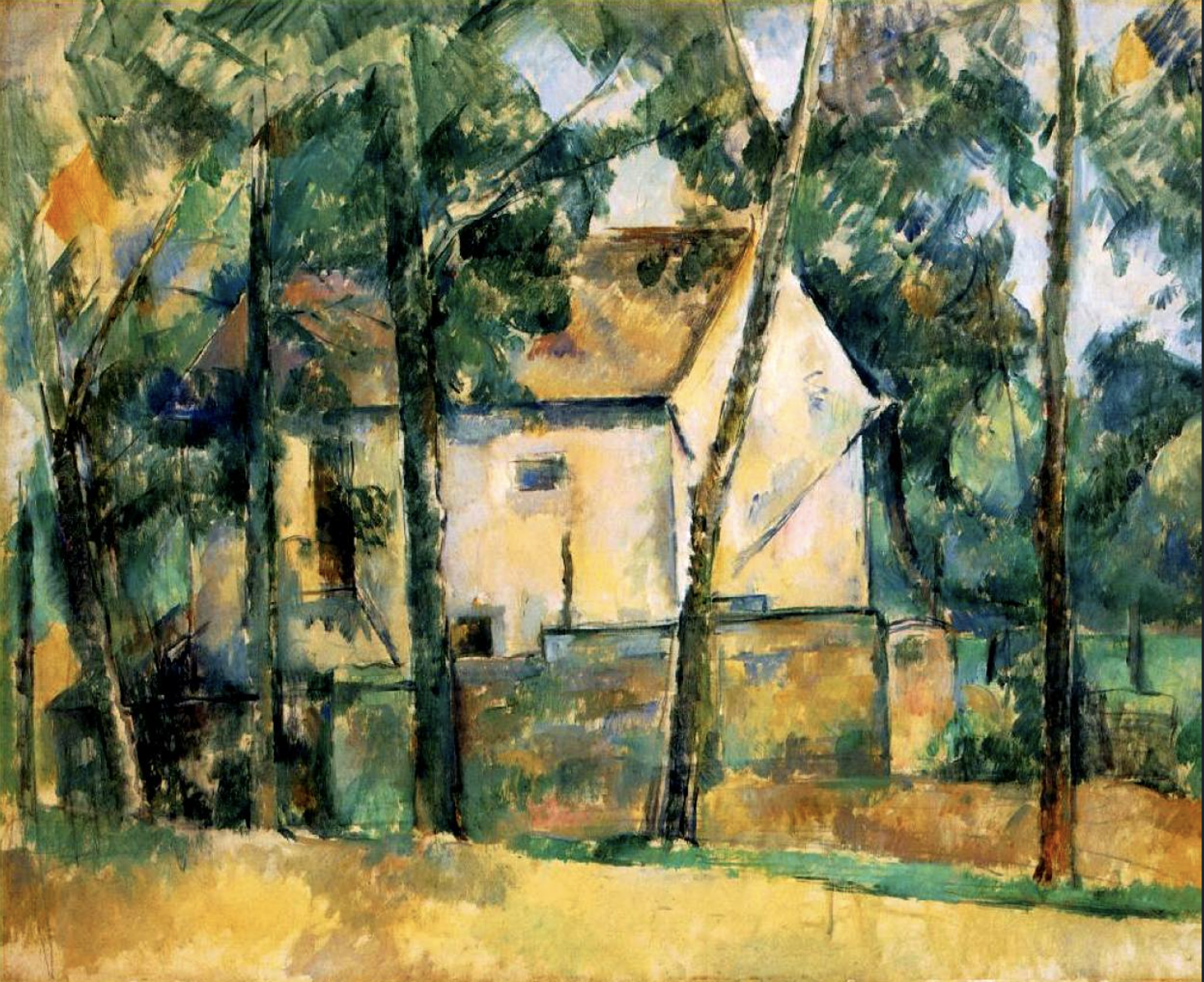
Boas shows the use of split representation across the decoration of utensils, jewelry, house fronts, and hats. He offers no extended explanation of the technique and its prevalence in Northwest arts, but does point to several factors: “Farreaching [sic] distortions result from the adjustment of the animal body to the decorative field and from the necessity of preserving its symbols” (p. 221); “in the front view of the animal the symbols [that is, the figural motifs identifying the animal] are shown to best advantage” (p. 229); “There is a tendency to cover the entire surface with design elements” (p. 251); “It appears that what we have called for the sake of convenience dissection and distortion of animal forms is, in many cases, a fitting of animal motives into fixed ornamental patterns” (p. 280); and that this art is of a piece “the heraldic idea” expressive of “the totemic aspect of social life” (ibid). From more recent art history one is reminded of Leo Steinberg’s account of the uses of the ‘splay-out principle’ in the late nineteenth-to-early twentieth century, with Cézanne bringing the sides of inanimate object around to a frontal view Picasso’s technique in his Analytic Cubist phase of rendering the splayed sides of a subject and so bonded the motif to the broader pictorial field,
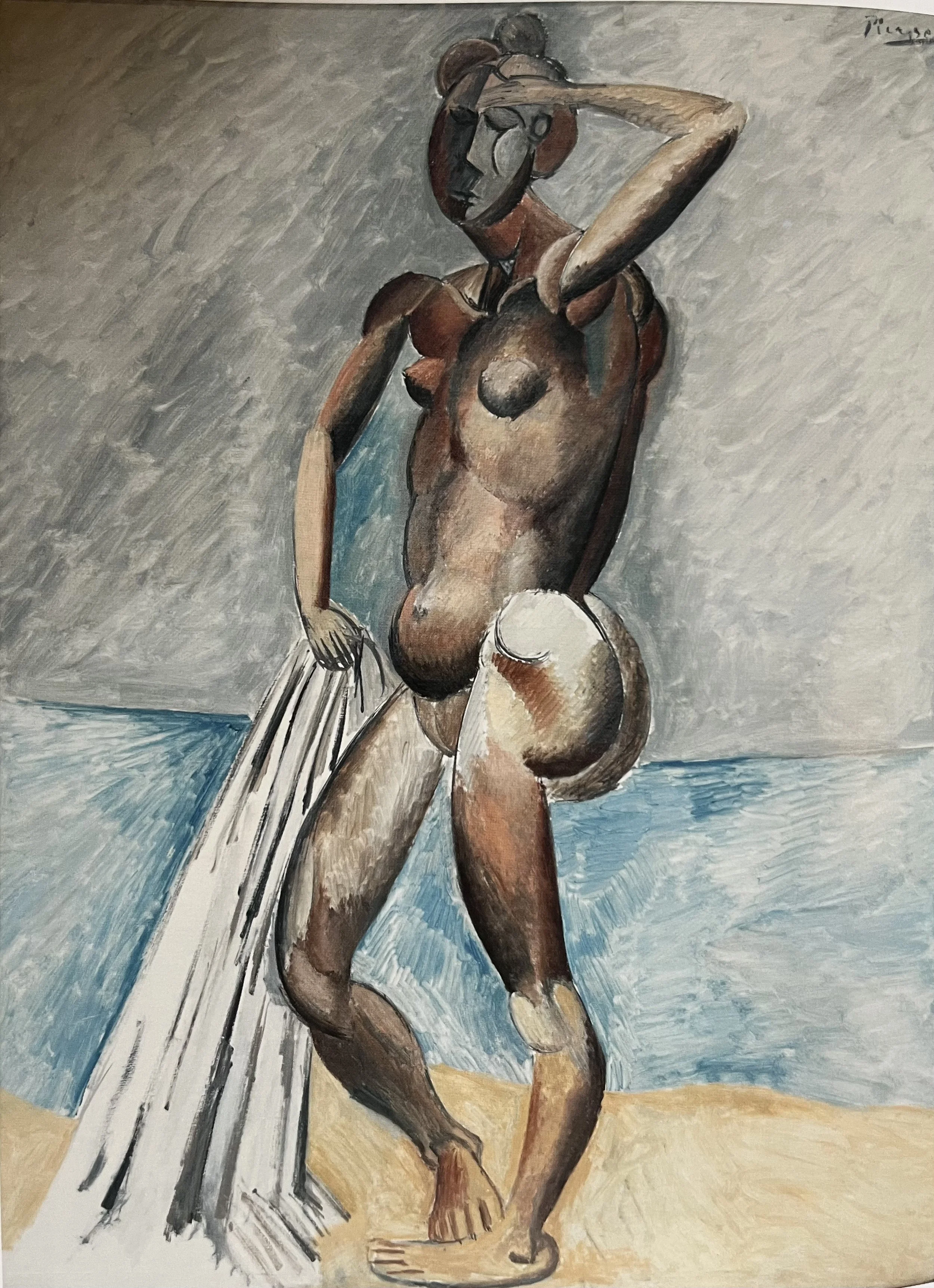
and Picasso splaying the female subject in order “to confirm a known fullness of the body by wrenching its averted sides into view” (Steinberg (2022), pp. 53-5).
For Boas the use of split representation is ultimately a way of rendering the three-dimensional (whether a real-world instance of, say, a bear or a whale, or of a sculpture or human structure) on a two-dimensional surface.
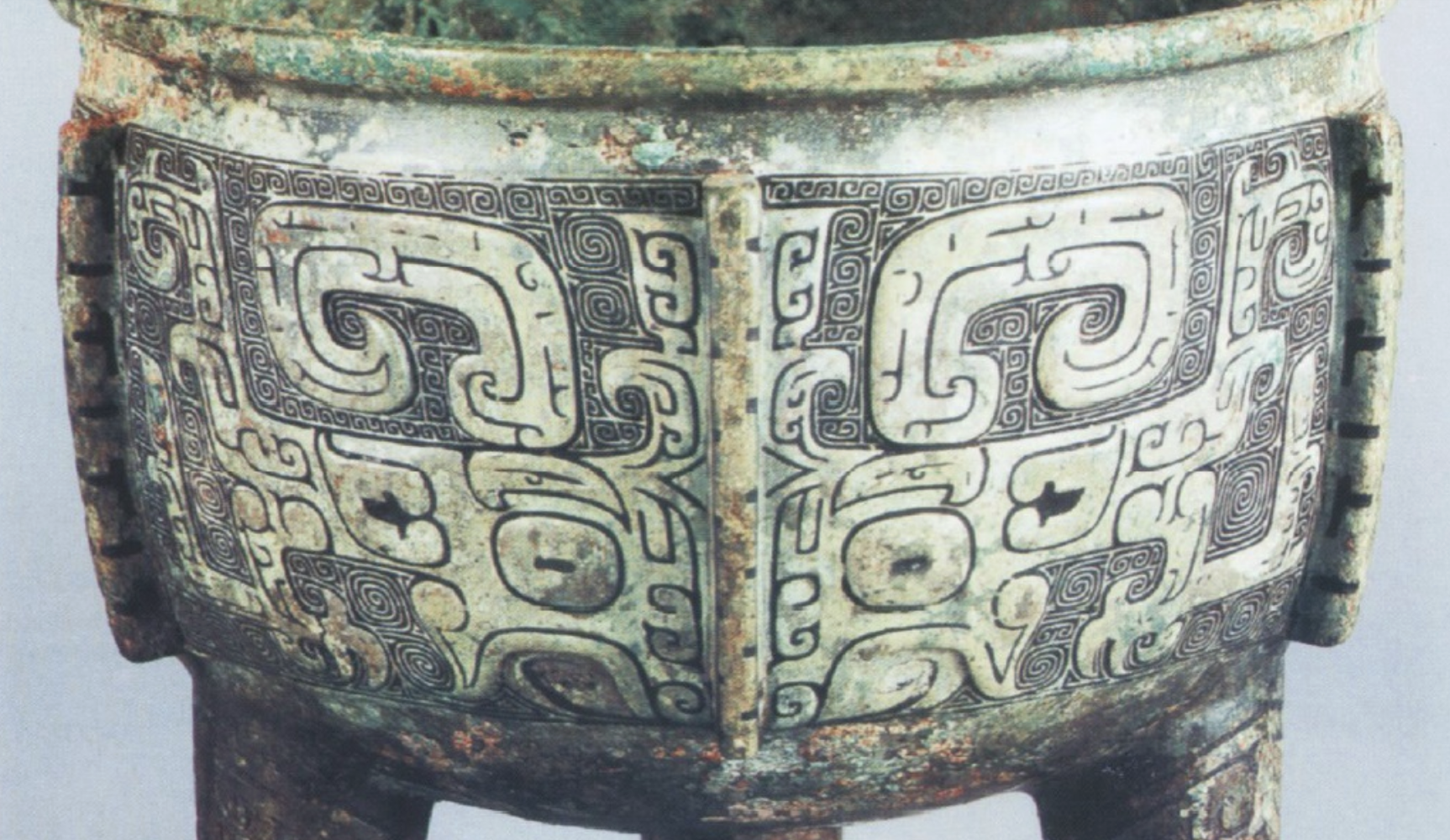
Building on Boas’s account, in the mid-1950’s Claude Lévi-Strauss treated split representation as a technique of pictorial representation in four historically unconnected cultures, the Pacific Northwest, early China, the Caduveo of the Amazon (about whom he had already written in Tristes Tropiques, and the Maori of New Zealand. Split representation in China is exhibited in the famous taotie figures on early bronzes,
the Caduveo in their face paintings,
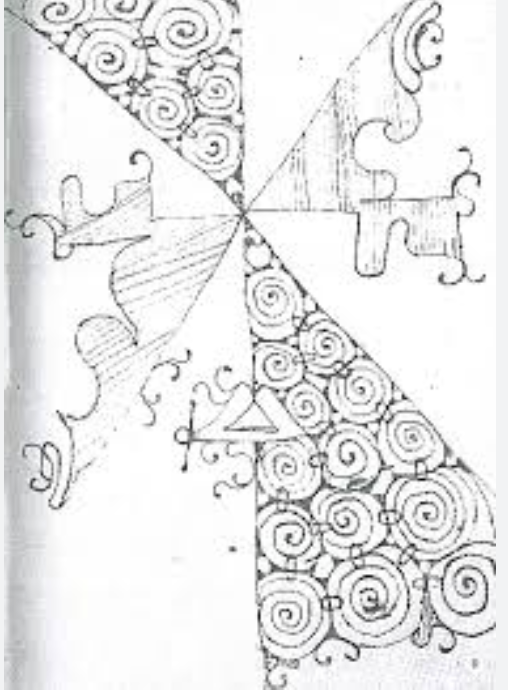
and the Maori in their facial tattoos and carvings.
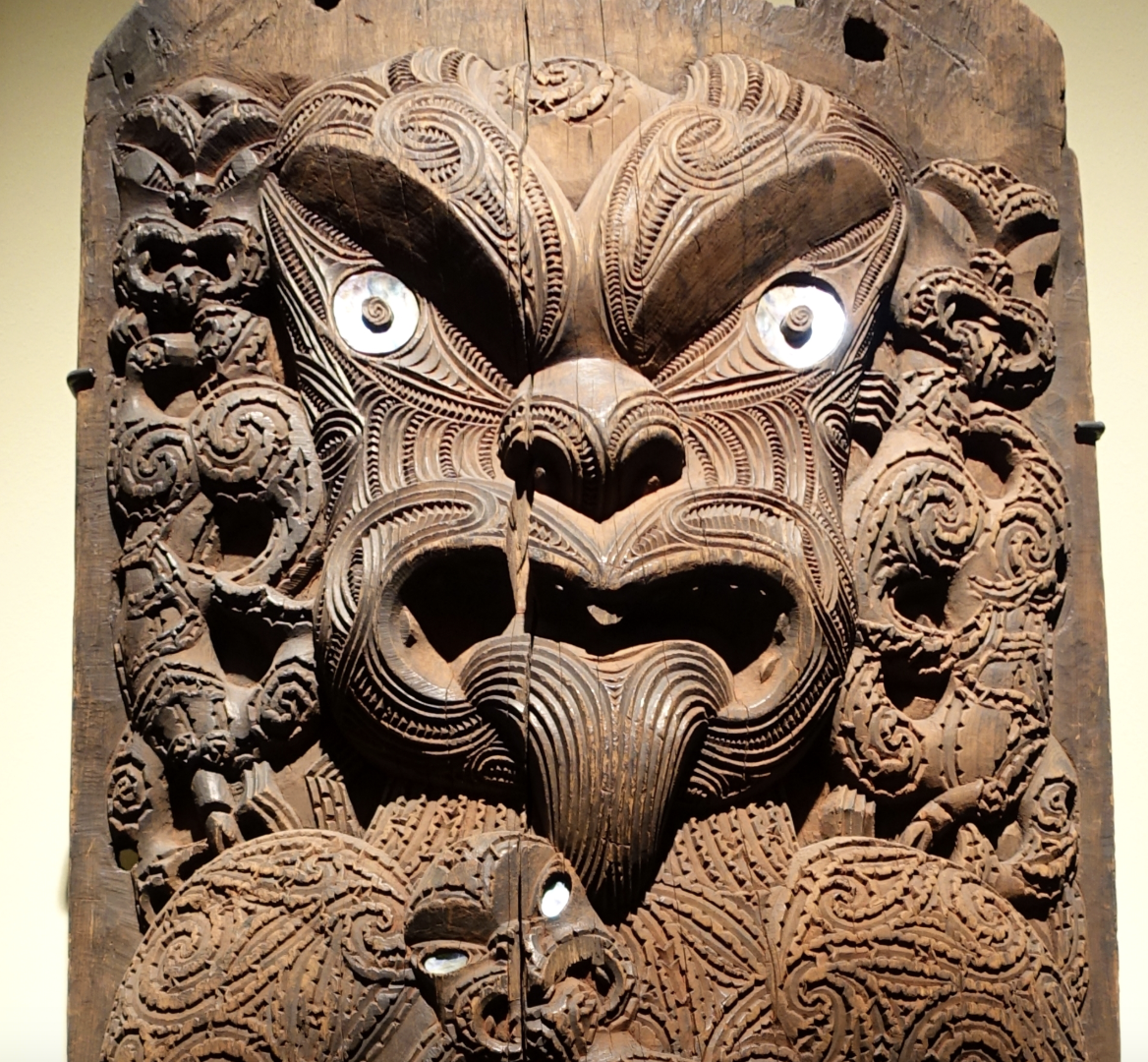
Though the use of this technique of representation is far from a human universal, and by hypothesis the occurrence of this striking technique cannot be explained through historical contacts, so it must be interpreted as an instance of the exercise of basic human capacities for cognition and depiction in response to some general imperative under some non-global constraint or condition. In Lévi-Strauss’s hands, the technique gains two kinds of intelligibility: its place in comparisons and in series, and in light of its aim. He begins by noting the similarities of the principles governing the Pacific Northwest and early Chinese styles, in particular split representation, dislocation of details, and highly elaborate symmetries. He then asserts that the seemingly very different Caduveo style is also an instance of split representation, though more abstracted, and one wherein the symmetry occurs not just along the vertical axis, but also along the horizontal. The Maori designs, like the Caduveo, are abstract and decorative in comparison with the Pacific Northwest and China. I refrain from presenting Lévi-Strauss’s highly compressed analyses, and simply note his assertion that consideration of these instances of split representation pushes “to its most abstract expression the study of dualism” (p. 255), in that one finds throughout these instances persistent dualisms that are transformed into each other in these arts, dualisms including representational/non-representational, carving/drawing, face/decoration, person/impersonation, individual existence/social function, and community/hierarchy. Echoing and amplifying Boas, Lévi-Strauss concludes that split representation is characteristic of cultures oriented towards totemic ancestors, and it “results from the projection of a three-dimensional mask onto a two-dimensional surface (or onto a three-dimensional one which nevertheless does not conform to the human archetype) and in the same way that, finally, the biological individual himself is also projected onto the social scene by his dress” (p. 257).
Unsurprisingly, given his polemic against the use of the nature/culture dichotomy in anthropology, Descola will not take up Lévi-Strauss’s conclusion about dualisms, but further he dissolves Lévi-Strauss’s structuralist framing, extracts the elements, and re-interprets them within his own broader and more systematic framework. As I understand it, Descola treats ‘split representations’, not as a perceptually salient and striking kind of cross-cultural and -historical visual representation; but rather interprets them as special cases, “salient because of [their] rarity, within a range of techniques that allow image-makers to make visible in a unitary figure an element of the world envisioned simultaneously from diverse viewpoints” (pp. 188-9). That is to say, the general imperative that Descola takes to govern this class representations is the demand to represent some figuration and/or visual field from multiple viewpoints simultaneously, in the service of providing a representation with richer content that would be possible in the canonical (say) naturalist manner of presenting a single instant from a single viewpoint. Descola leaves the famous Shang Chinese taotie undiscussed, and only discusses Chinese representations as paradigms of visual analogism; and likewise he drops consideration of the putative instance of split representation closest to Lévi-Strauss’s heart, the Amazonian animist face-painting of the Caduveo. Following the lead of the art historian Hubert Damisch, he treats Boas’s alleged example of split representation in the body painting of dancing boys in the Pacific northwest
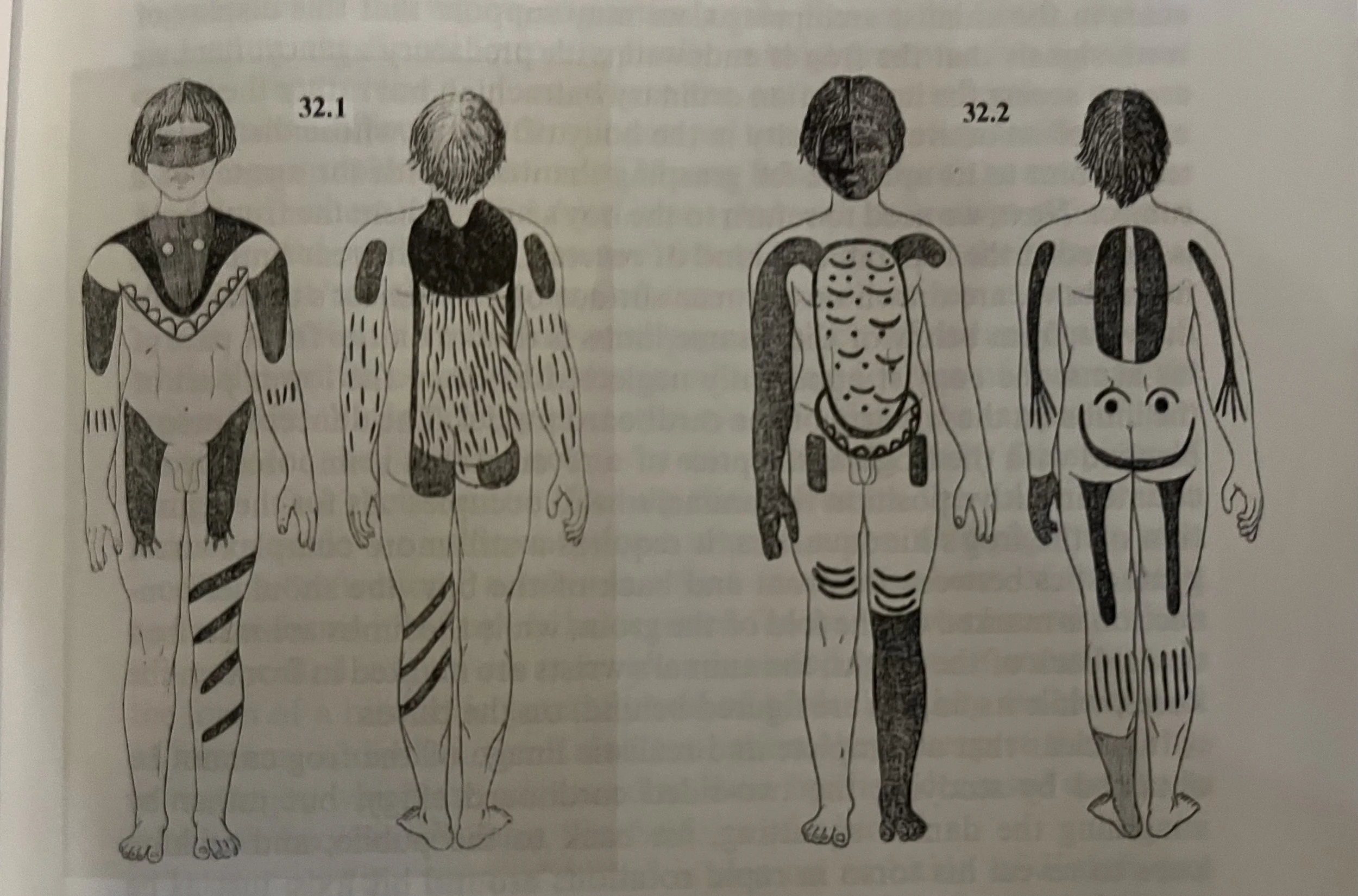
as rather a case of the ‘exploded representation’ of distributed identifying motifs of the bear and frog painted about the boys’ bodies. In their characteristic uses in dance, the painted bodies do not present a single image composed of opposed profiles, but rather an “oscillation between a human body and an animal body” (p. 101).
Another striking example of how Descola’s framework elicits an interpretation different than a prevailing conception is his account of the famous statue of the god A’a from the Polynesian island of Rurutu.
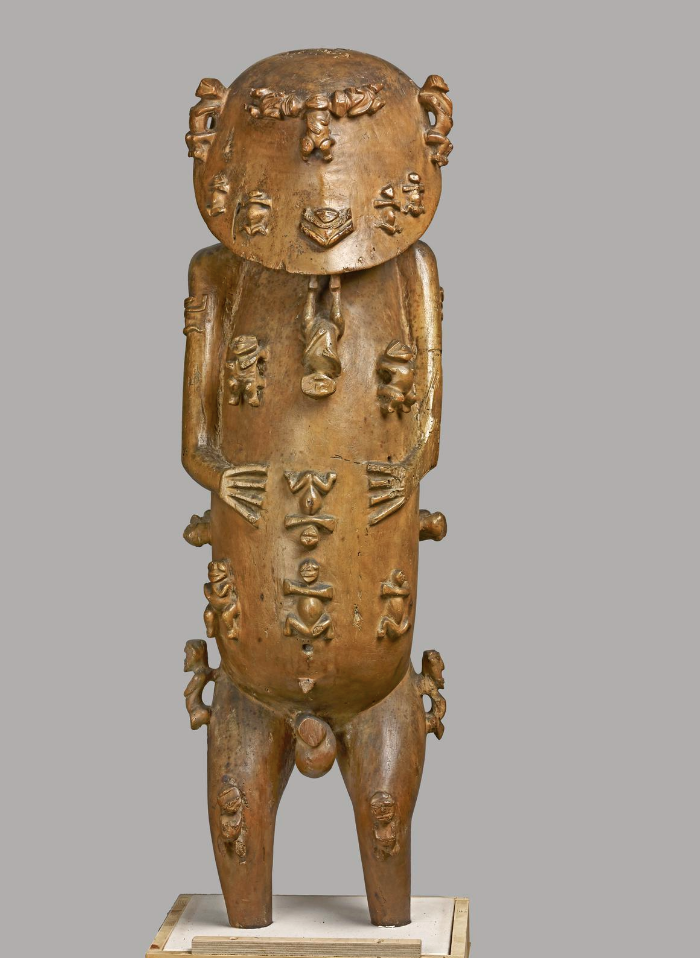
Gell had argued that the statue of A’a exhibits two important meaning-bearing characteristics: first, the god is depicted as bearing numerous small figures of gods in different poses, and this manner of depiction “demonstrates the property of self-similiarity [sic] at different scales of magnification/minification”; and second, that the statue is hollow with a lid on the back, and so is also a box, and so is a primary image of Rurutan divinity, “encompassing and subordinating all the subordinate gods who sprout from its surface and once resided in its interior” (Gell, p. 137) These characteristics are in the service, Gell argues, of depicting the kinship among the gods, which corresponds “to the kinship units (clans) comprising Rurutan society as a whole”, and so ultimately in “represent[ing] personhood in the form of genealogy” (pp. 137-9).
Descola flatly contradicts Gell’s account of A’a, both for stylistic reasons and for reasons flowing from his four-ontology framework. He counters Gell’s claim about self-similarity by noting that the small figures differ both in their forms and their postures from the used to depict A’a (Descola, p. 567, n.116), and that the relevant Polynesian ontology is analogist (and not totemic, as the genealogical conception would be on Descola’s account). Rather than the ‘fractal’ conception of personhood indicated by Gell, on Descola’s account the fundamental ontological aim of the statue is present a totalizing conception of Rurutan divinity by “embodying a meta-relation”, as well as an analogist conception of persons as consisting in “a multitude of variants in unstable balance” and who exist “only by virtue of internal and external relationships that make them what they are” (p. 310).
Because of the intricacy of Descola’s accounts, I’ve reached my customary length for a blog post and so end here. In the forthcoming final post I’ll consider his account of contemporary visual art and some reflections on the question of whether Descola is willy-nilly presenting an account of not visual ontologies generally, but more specifically ontologies of the world’s visual arts.
References and Works Consulted:
Hubert Damisch, ‘Paradoxe du danseur Kwakiutl: Note sur le dédoublement de la représentation’, in Pour Jean Malaurie (1990), ed. Sylvie Devers
Philippe Descola, Beyond Nature and Culture (2013)
--‘Human Natures’, in Social Anthropology (2009)
--Forms of the Visible: An Anthropology of Figuration (2025)
Alfred Gell, Art and Agency (1998)
Claude Lévi-Strauss, Tristes Tropiques (1955)
--‘Split Representation in the Art of Asia and America’, in Structural Anthropology (1963)
G. E. R. Lloyd, Being, Humanity, and Understanding: Studies in Ancient and Modern Societies (2012)
Leo Steinberg, ‘Drawing as if to Possess’, in Picasso: Selected Essays (2022)