The following are excerpts from an interview done around 2011 of me by a student on my general views on art. I stumbled on the transcript of the interview recently, and was struck how some of the thoughts developed in my current work in the philosophy of art were inchoately present now (2026) in the manuscript I’m writing on the philosophy of artistic meaning. I thought I might put the entire transcript on my blog (johnrapko.com), which consists of the interview at around 3000 words, followed by around 1000 words transcribing part of a class where I respond to students’ questions. However, I have not been able to contact the interviewer, and am reluctant to publish the piece in its entirety without the interviewer’s permission. So I have excerpted bits of my responses which I hope are of some independent interest, as well as informally introducing some of the guiding thoughts in my recent work. Although I no longer agree with every statement herein, I have refrained from any corrections or additions, and only lightly edited for concision and ease in reading:
On Artistic Meaning and Achievement in Contemporary Art:
“Art, or the concept of art, you might say, in its contours has two major aspects: the boundary issue indicated by the question ‘What is the distinction between artworks and other artifacts in the world?’ There is no reason to think that the boundary is a sharp line; I don’t think that it is. There is a kind of continuity there. Works of art exist of a spectrum wherein one end is marked by minimal artifacts that are determined rigidly by some purpose, and the other end consists of works of are that are maximally rich with meaning. When we talk about meaning, we talk about multiple types of meaning: paraphrasable meaning, representational meaning, expressive meaning, symbolic meaning, metaphorical meaning, meaning in effects, and resonance.”
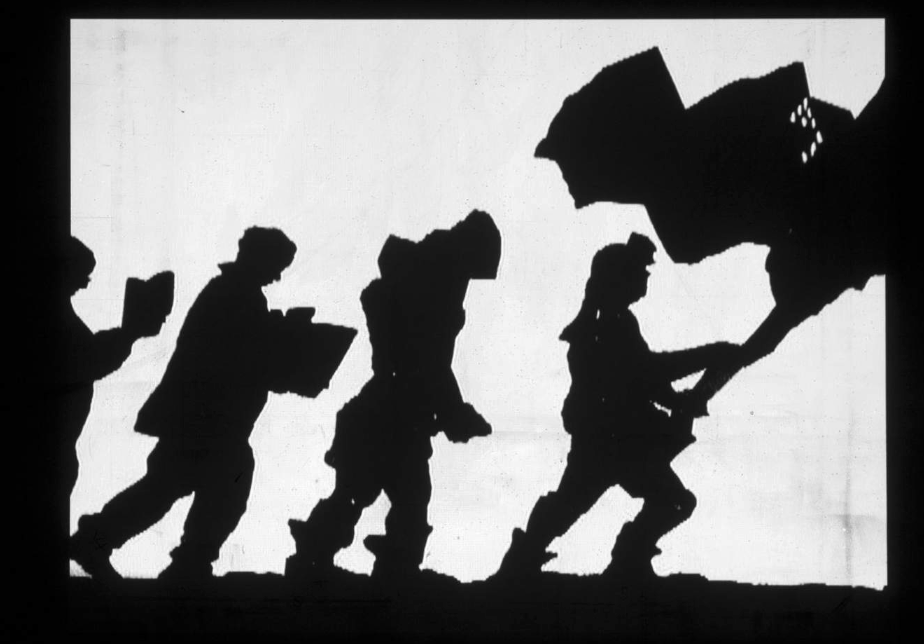
“It does seem to be a feature of that arts that their making involves what linguists call ‘markedness’. Cross-culturally people recognize that certain kinds of people are particularly skilled or particularly powerful in making richly meaningful artifacts. I think that such understanding of the arts is common to humanity. This point of view is becoming increasingly common nowadays as people recognize more and more that there are surprisingly many human universals. . . . In regard to thinking about contemporary art one should always keep the sense of the human universal in the background. Even with the most nontraditional or oddest bits of modern or contemporary art relate, even if by negation or deviation, to these common universals. But I do think there is something particularly difficult in speaking about excellence in art in relation to contemporary art. Theodor Adorno’s Aesthetic Theory opens with the thought that it is self-evident that there is nothing self-evident about modern/contemporary art. I think what he’s saying is that because everything in recent art has been subjected to experimental testing and even rejection, we don’t have any shared, more or less binding consensus on what counts as achievement in contemporary art. So I think there’s a particular and very burdensome demand in contemporary art: making a great work of art requires that the artist in some way make manifest the very criteria that govern the work’s making. . . Rosalind Krauss has claimed that there is a distinctive kind of achievement in contemporary art that she calls inventing, or re-inventing, the medium. That’s another way of making the point.”
On Content in Late Modern Art:
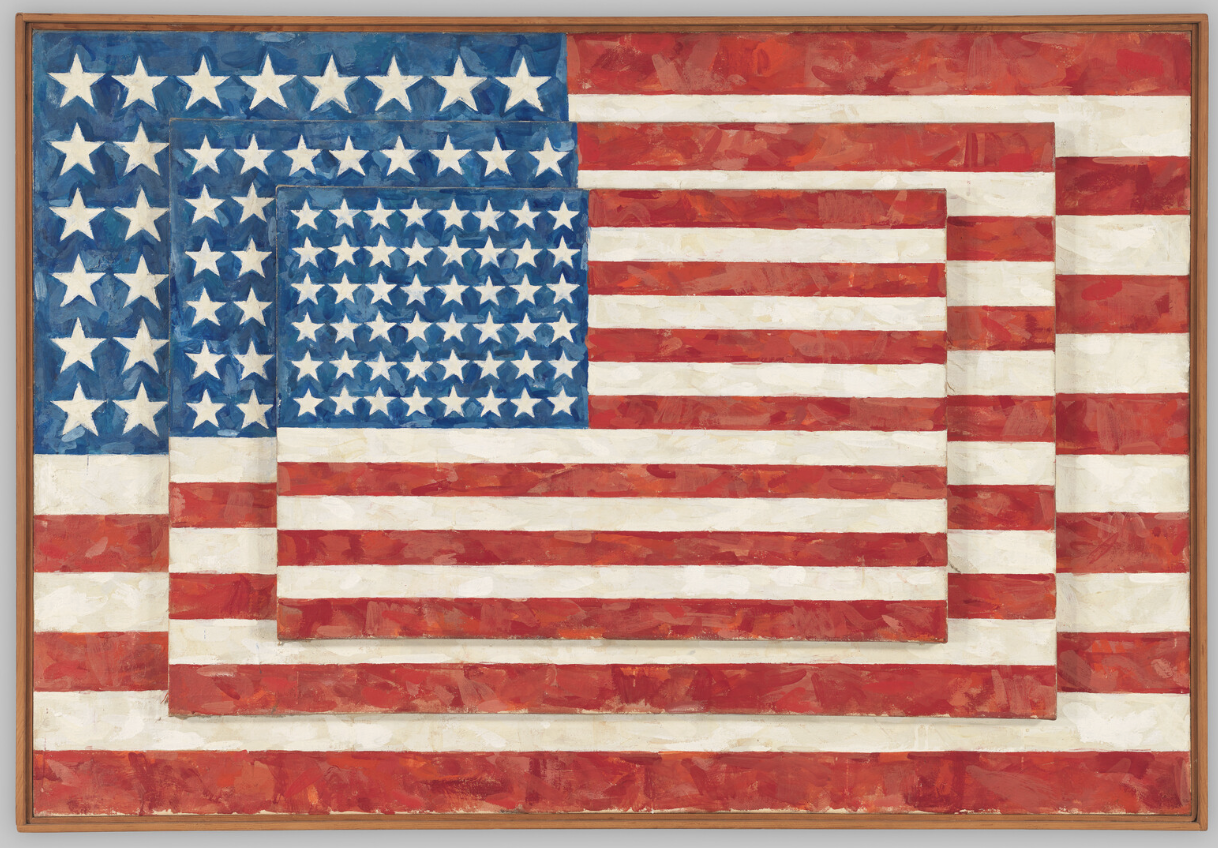
“What one sees there [in Rauschenberg, Johns, and then on into Pop Art] is the abandonment of the idea that there is a distinctive content to art . . . that is what is at the core of what generates the resonance of many works in contemporary art, [that is,] that they work from the common stuff of life . . . What we see in a great deal of contemporary art, art of the last 50-60 years is the taking of a recognizable bit of contemporary life, which can be anything--a flag, numbers, certain things thrown up by the mass media, and so forth. The audience needs this recognizability to gain access to the work of art . . . art aims at a kind of intelligibility . . . so the artist has a demand that the content not be simply or overly private, but . . . for any particular artist [that] allows for enormous range. If it didn’t allow for enormous range, then art making would shut down because it is basic to art-making that it has to allow something of the inexhaustible richness of human life to come to expression; it cannot be a highly restricted activity.”
Not Craft, but ‘Markedness’:
“I think it goes back to something even more basic than craft, which is ‘markedness’. What the artist makes has to stand out from everyday kinds of making . . . Why does it have to stand out? Because art stands out. Here I think the most basic and very valuable argument was given by Ellen Dissanayake in Homo Aestheticus, where she says that in her biological, evolutionary account of art the most basic feature of art is what she calls ‘making special’ . . . Works of art have to stand out from everyday life in order that the work gain something of the sense that what is being made or done in the work is richer--semantically richer, more expressive, more symbolically charged, more resonant--than all the other things made and done in life.”

Does the Emperor have no Clothes?
“The taste for art is not a single thing . . . even within an artistic sub-world, there are different strands [of taste] that have come together and maybe coalesce for a certain time . . . I think the problem with the Turner Prize in many instances is that it focuses on, and one might say fetishizes a particular aim in art: the demand for originality. But to what end is originality? . . . I don’t follow prizes all that much; I have never taken them too seriously. Things like the Turner Prize are only half a step away from the Oscars.”
Shock art!
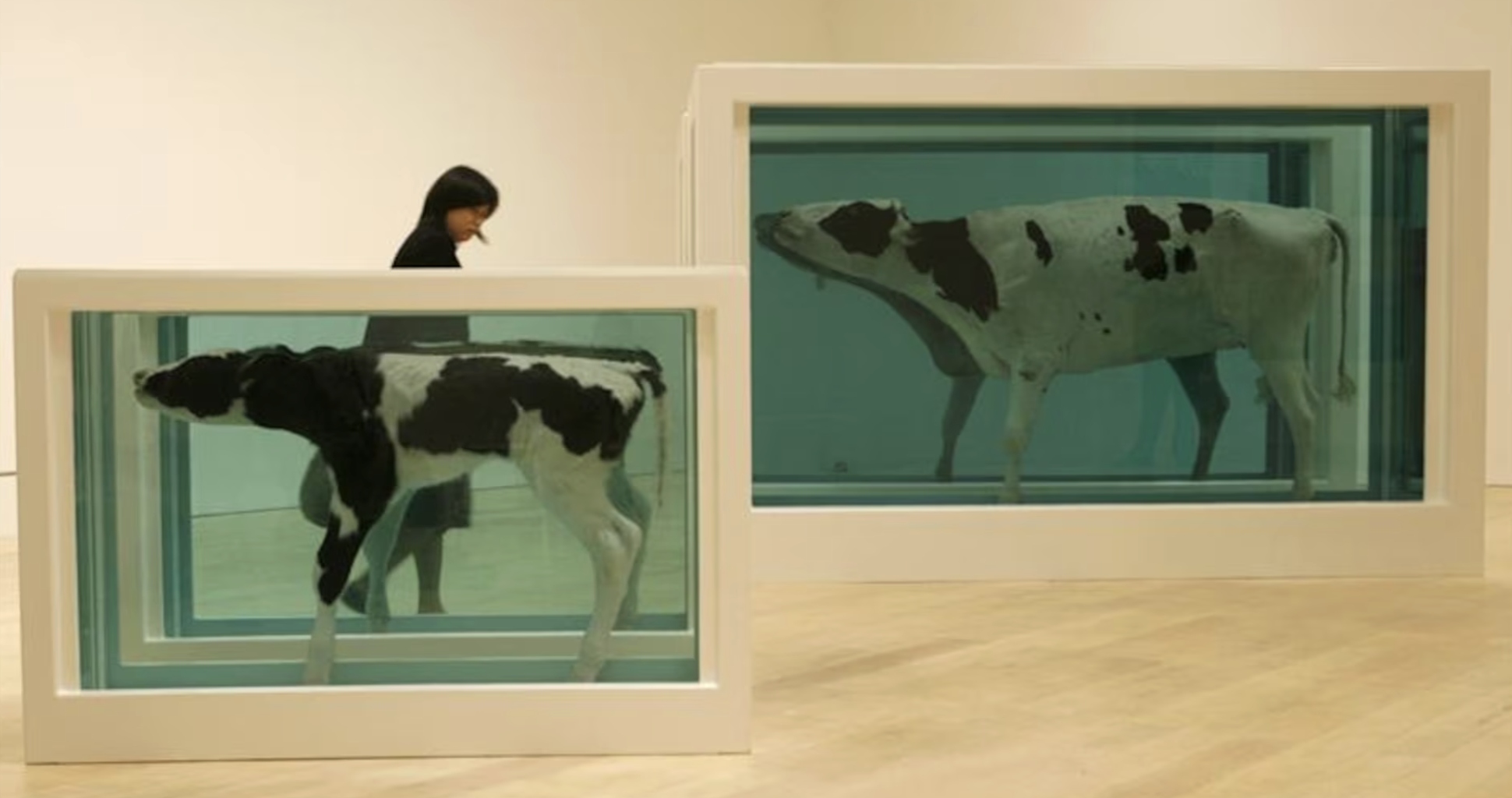
“Shock art has two virtues and infinite faults. One virtue is that the only unforgivable feature of a work of art is that it is boring, if it does not engage anybody’s attention. The second thing is that, although I can honestly say that I despise shock art, there is something valuable about art--visual art, poetry, novels, whatever--that keeps an eye, so to speak, on the disturbing quality of life. I am very influenced on this point by Nietzsche and also a contemporary philosopher, Raymond Geuss . . . My own experience is that pessimism can be quite life-giving. Keeping in mind the grim aspects of life can actually free you from certain anxieties and overly great concern with trivialities and superficialities . . . I do think that Western civilization is afflicted with a certain kind of optimism [that motivates] the whole drive towards knowledge as a source of prediction and control. The great civilizational value of pessimism is that it frees you from the idea that life is a rationalistic project . . . That is a kind of deep excursion into the limited virtues of shock art: it is not boring and it might help free one from optimism. Besides that, shock art seems ludicrous in many ways.”